During Mental Health Awareness
Month, we often talk about anxiety, depression, trauma, burnout, and emotional
well-being. But we also need to talk about relationships.
Because the people closest to us
can bring joy, comfort, laughter, and support. They can also become a source of
stress when disagreements turn into ongoing tension, when we feel unheard, or
when we keep circling the same conversation without ever getting to what is
really underneath it. Relationship quality has a meaningful connection to
mental well-being, and chronic stress can affect areas of thinking and
emotional regulation that matter for brain health too.
Now, let me say up front: the
disagreement I am about to tell you about is not one of those heavy,
marriage-in-trouble kinds of conversations. It is much more ordinary than that.
In our house, one of our
longest-running “agree to disagree” debates has been about phones.
I am firmly Team iPhone and
hubby is confidently Team Android and over the years, we have each made
our case more than once.
I have praised the ease of the
iPhone, the way everything connects, and the fact that most of our children are
already on that side of the technological family tree. On the other hand, hubby
has defended the flexibility, functionality, and logic of his Android with
equal conviction. Neither of us has been moved.
The Great Phone Debate Returns
Recently, we were riding in the car
when my husband, who was driving, asked me to check something on his calendar. Simple
enough, right? Except I was holding an Android. I tapped. I swiped. I looked. I
tried to find the calendar. And after fumbling around long enough to realize I
had no idea what I was doing, I said what any loving wife committed to the
truth might say:
“You need to switch over to an
iPhone and be a part of this family.” Most of our kids have iPhones, after
all.
The conversation was playful and competitive,
even. The kind of back-and-forth that has just enough teasing in it to be funny
because both people already know where the other stands.
But later, as we kept talking, we
admitted something that took the conversation deeper. At this point in life,
neither one of us really wants to switch. Not because the other platform is
necessarily terrible, but because switching feels like a lot.
Sometimes the Argument Is Not
Really About the Argument
We are both over 65 now, and we are
willing to admit what we may not have said as plainly before. There is some
fear underneath the loyalty. A learning curve. A concern about losing data. The
frustration of not knowing where things are. The thought of becoming inefficient
at something we use all day long. The worry that a tool meant to make life
easier could suddenly make us feel confused and dependent.
So maybe the Android-versus-iPhone
debate was never only about which phone is better.
Maybe it was also about change.
Maybe it was about comfort. Maybe it was about not wanting to feel slow,
lost, or frustrated while learning a whole new system when the one we have
works just fine. And here is the relationship lesson hiding inside that very
ordinary conversation:
Sometimes what looks like
stubbornness is really self-protection. Sometimes the disagreement is on
the surface, but the stress is underneath.
When Disagreement Creates
Unnecessary Stress
Disagreements are normal in any
close relationship and a peaceful marriage is not one where two people agree on
everything. That would not even be realistic. But when we keep pressing the
same issue, trying to get the other person to think like us, choose like us, or
admit that our way is superior, we can create stress that does not need to be
there. And stress does not stay contained in the conversation.
Chronic stress has been linked to
changes in cognitive flexibility, working memory, and behavioral inhibition —
in plain language, the brain processes that help us adapt, think clearly, and
regulate responses. Now, no one is going to develop brain fog because their
spouse prefers an Android, but the principle still matters.
Repeated tension, even around small
things, can wear on us when it is fueled by pressure, defensiveness, or the
feeling that we are not being understood. That is why healthy disagreement
matters. Not because we must avoid conflict at all costs, but because we
need to learn how to disagree without turning every difference into a stressor.

Not Every Difference Needs to Be
Solved
Once we admitted what was really
underneath the phone debate, the goal changed. We did not need to convert each
other. We needed to make sure that, if one of us ever needed to use the other
person’s phone, we could access the things that matter.
So we began making a list of what
each of us needs to know how to find on the other’s device:
- contacts
- passwords
- calendar
- photos
- emergency information
- returning calls
That list became a better solution
than another round of “you should really switch.” Because the real concern was
not brand loyalty. It was preparedness and peace of mind. It was reducing the
stress of, “What if I need to do something important on your phone and I cannot
figure it out?”
That is relationship wisdom. Not
every disagreement needs a winner. Some need understanding, a little grace, and
a practical plan.
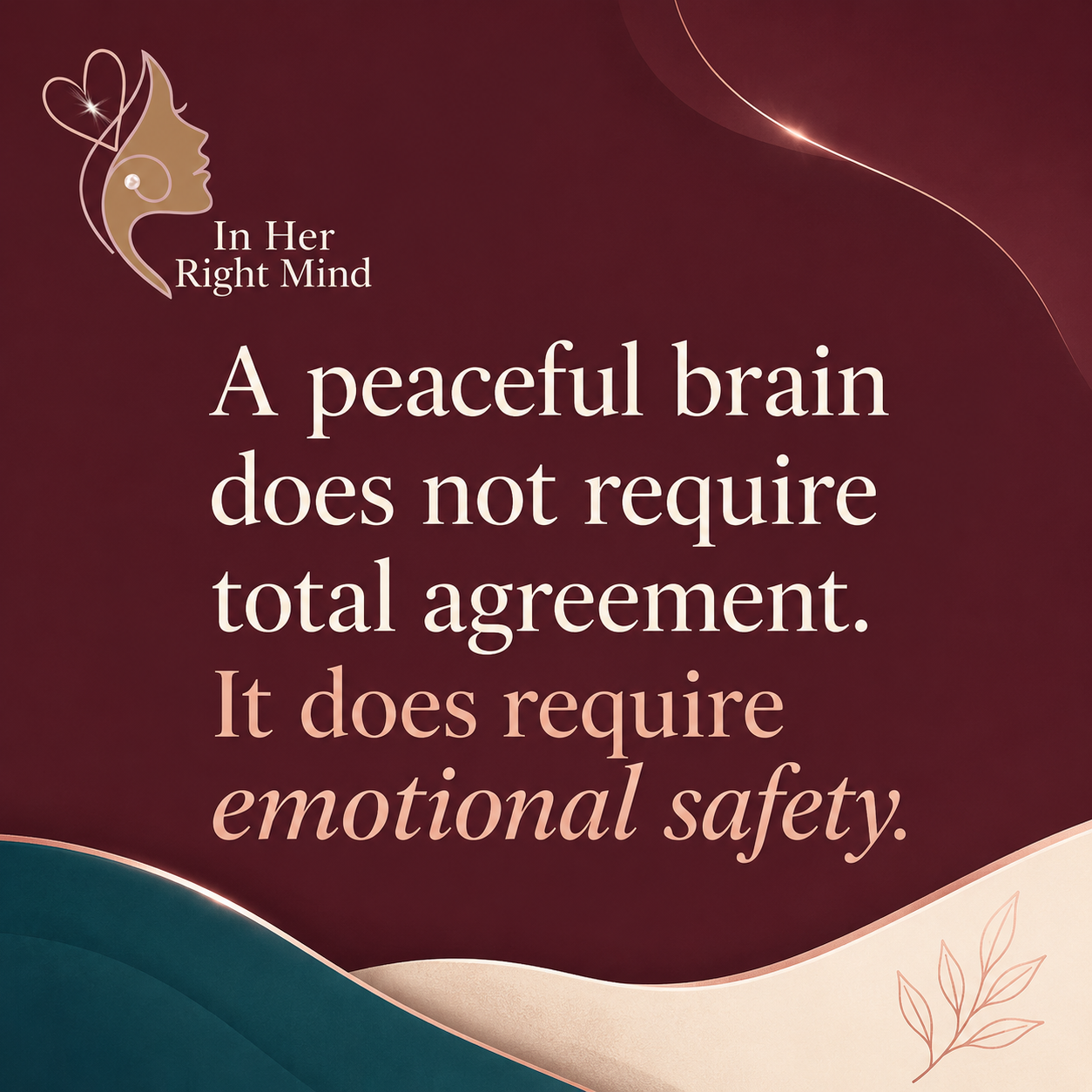
A Peaceful Brain Does Not
Require Total Agreement
Listen up: Mental health in
relationships is not about never disagreeing. It is about learning how to
disagree without damaging one another. It is about asking better questions like:
What is really underneath this tension? Is this about the issue itself, or
about fear, control, comfort, or vulnerability? Do we actually need agreement,
or do we need understanding? Is there a practical plan that could reduce the
stress without requiring either person to surrender who they are?
Because sometimes peace does not
come from finally getting on the same page. Sometimes peace comes from
understanding why the other person is on a different one. And once we
understand that, we may stop pushing so hard. We may soften and become more
curious. We may realize the relationship matters more than winning the point.
Relationships Belong in the
Mental Health Conversation
During Mental Health Awareness
Month, it is easy to focus only on individual habits: sleep, stress, food,
movement, therapy, prayer, and emotional support. Yes, all of that matters. But
relationships matter too.
The emotional climate of our
closest connections can affect how safe, supported, stressed, or settled we
feel. And when stress becomes chronic, the brain does not simply shrug it off. So
take care of your mind and your brain. And take care of the way you handle
recurring disagreements with the people you love. Because every difference
does not have to become a battle.
This week, think about one
recurring disagreement in an important relationship. Maybe it is not about
phones. Maybe it is about money, household routines or family traditions. Maybe
it is how you spend time or how you communicate with each other. Ask yourself:
What may be underneath this
disagreement?
·
Fear?
·
Fatigue?
·
A need for control?
·
A desire to feel competent?
·
A worry about being left out, left behind, or
misunderstood?
Then ask: Do we need to agree —
or do we need to understand one another better? Because a peaceful brain
does not require total agreement.
It does require emotional
safety.
Blessings,
Dr. Janice R. Love
In Her Right Mind