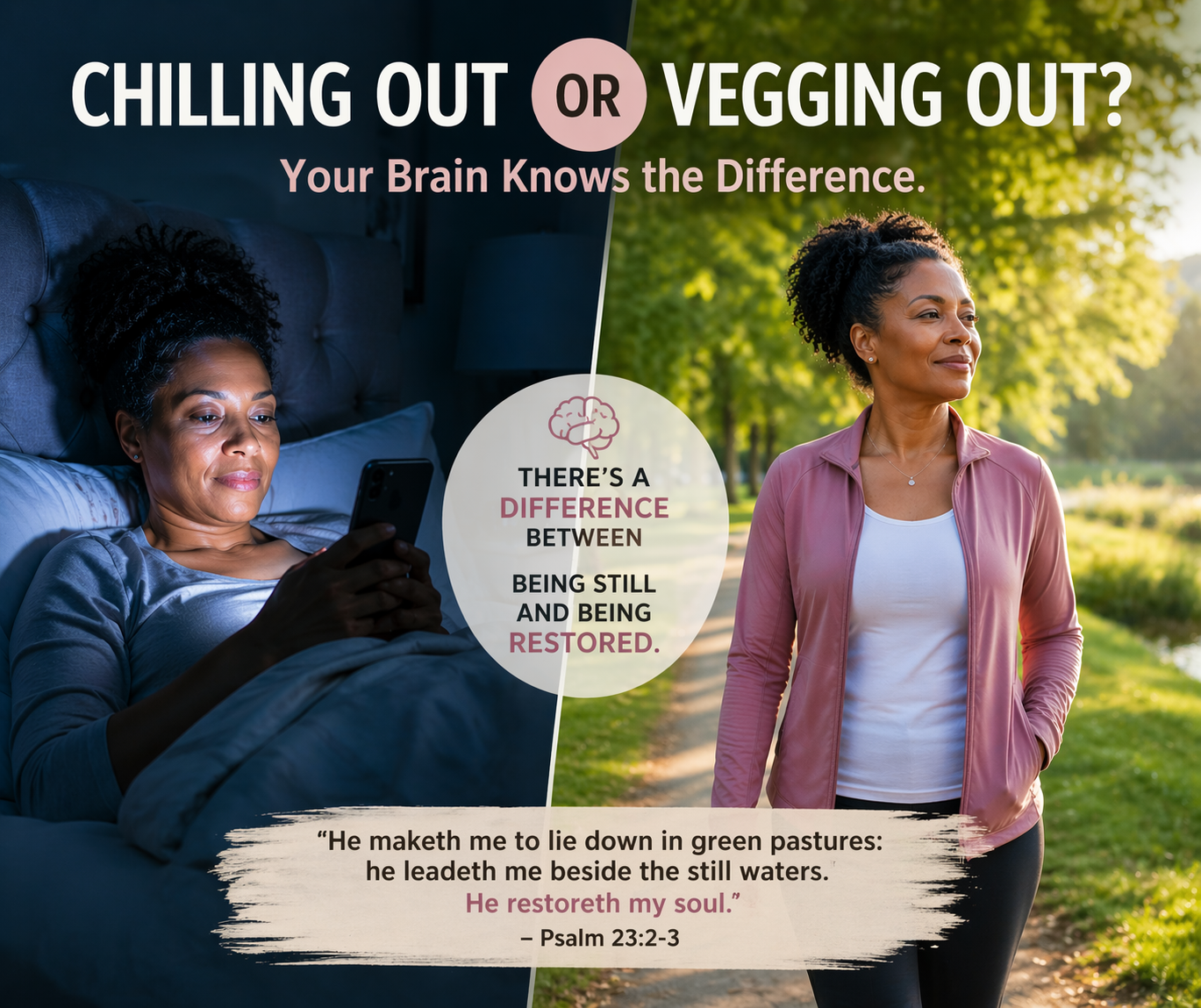
There was a season when some of my
favorite words on weekends and holidays were simple: I don’t want to do
anything. After working hard all week, that sounded like the perfect
reward. No schedule. No pressure. No responsibilities. Just me, the bed, the
couch, the television, and later on…my phone.
I told myself I was resting.
But if I am honest, there were many
times I got up feeling worse instead of better.
I was more tired. I was more sluggish
and mentally numb.
Have you ever picked up your phone
just to check one thing and somehow resurfaced two hours later feeling drained?
That is when I learned something
important:
Chilling out and vegging out are
not the same thing.
Real rest restores you while vegging
out often just occupies you. There is a difference between being still and
being restored. Many adults underestimate how much time they actually spend on
screens. Recent global data shows the average adult internet user spends about 6
hours and 38 minutes online each day, with roughly 2 hours and 21
minutes of that on social media alone.
This means many people are spending
the equivalent of a part-time job looking at screens—and often calling it
relaxation. Before you think I am passing judgement on your screen use, I am
not against television, phones, or social media because I use them too. Technology
can educate us, connect us, inspire us, and entertain us. But when passive
screen time becomes our primary form of recovery, it can quietly work against
us.
You lie down meaning to rest but
instead of peace, you get overstimulation. Instead of renewal, you get
numbness. Instead of feeling better, you feel foggy.
Green Pastures or Blue Light?
Psalm 23 says: “He maketh me to
lie down in green pastures: he leadeth me beside the still waters. He restoreth
my soul.”
Notice the picture. Green pastures. Still waters. Restoration.
Not endless scrolling. Not autoplay
until midnight. Not lying in bed with the phone glowing in your face. Not
channel surfing until your body feels heavy and your mind feels flat.
The Lord’s model of rest includes
peace, calm, renewal, and restoration. Many of us have replaced green pastures
with blue light. We lie down, but we are not restored.
Midlife is not the season to play
games with your energy or your brain health.
This is the season when many women
are already dealing with:
- brain fog
- stress overload
- sleep disruption
- hormonal changes
- forgetfulness
- lower motivation
- emotional fatigue
Adding excessive passive screen time to that mix
can make it harder to notice what your body truly needs. Sometimes you do not
need more scrolling. Instead you need more hydration and movement, sunlight or
even connection, sleep or prayer and silence. You may even need to laugh or
simply to step away from the screen.
Check the Truth in Your Phone
One of the easiest ways to wake up
to reality is to check your screen-time report. Your phone is keeping receipts.
Most smartphones now track:
- daily screen hours
- number of pickups
- time spent on social media apps
- notifications received
- weekly averages
Many people are shocked when
they finally look. What felt like “just checking a few things” can add up
to hours a day.
No shame. Just awareness. Because
what gets measured can be managed.
Already Retired or Thinking
About Retirement?
I am saying this from experience
with love. If retirement means doing nothing all day, think again. Rest is
necessary. But passive living is costly. Your next chapter deserves more than
sinking into the couch from morning to night. Retirement can be a beautiful
season of freedom, but the brain still needs stimulation, movement, purpose,
learning, creativity, and joy.
You are not retiring from being alive.
Better Ways to Truly Chill Out

Instead of automatically reaching
for the screen, try:
- Sitting outside without your phone
- Taking a short walk
- Stretching and
breathing deeply
- Reading something uplifting
- Calling a friend
- Journaling your thoughts
- Listening to worship or calming music
- Working on a hobby
- Watching one intentional show instead of endless
random viewing
- Putting the phone down an hour before bed
The next time you say, “I’m going
to chill today,” ask yourself one honest question: Will this restore me, or
just occupy me?
Now your know that your brain knows
the difference.
Rest on purpose. Don’t disappear
into the screen.
Blessings,
Dr. Janice R. Love
In Her Right Mind