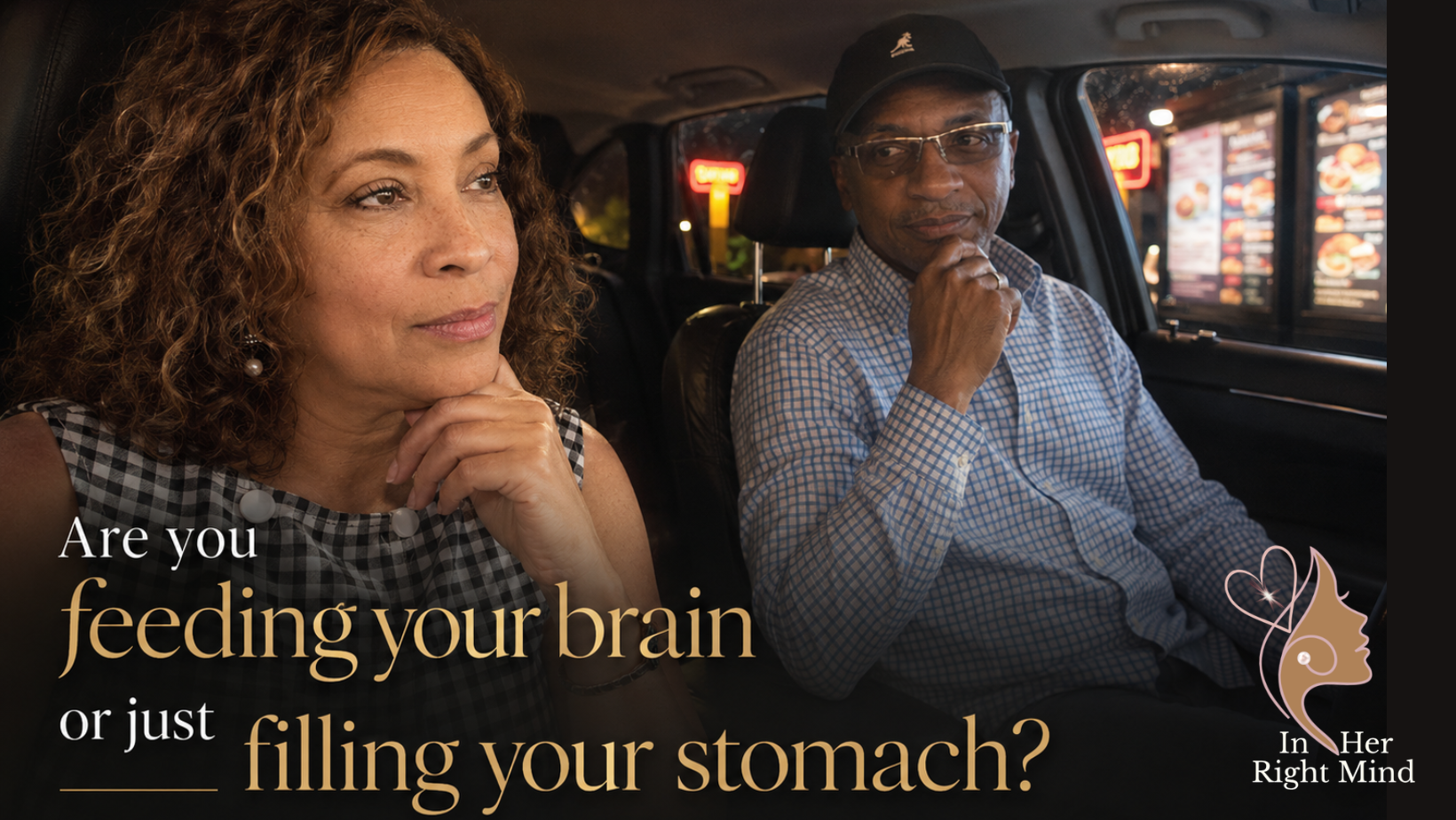
A few nights ago, my hubby and I
found ourselves in a situation many of us know all too well. We had an evening
appointment and were out later than expected. We were hungry. And by the time
we started looking for something to eat, almost everything was closed except
fast food. There’s a reason why drive thru signs shine so brightly. When you
are tired, hungry, and just trying to get home, those glowing drive-thru signs
can start looking like a blessing. But we had a choice to make.
Did we want burgers, fries, fried
chicken, and sugary drinks late at night? Or could we find something that,
while not a home-cooked brain-healthy meal, at least felt like a better choice?
We ended up grabbing sandwiches
from Subway. Was it perfect? No. But that night, we were trying to avoid ending
the day with a heavy bag of fried, highly processed food just because it was
convenient.
And that moment made me think: How
often are we feeding our stomachs without thinking about what we are doing to
our brains? After all convenience may fill you up, but it does not always
nourish you well.
The Typical Fast Food Diet
When I say fast food, I am not
talking about one burger every now and then. I am talking about a pattern of
eating that can show up morning, noon, and night: A breakfast sandwich on a
biscuit, hash browns, and a sugary coffee drink. A burger, fries, and soda for
lunch. Fried chicken, white bread, and sweet tea for dinner. Pizza, nuggets,
milkshakes, pastries, energy drinks, and “coffee” drinks that are closer to
dessert than coffee.
This kind of eating pattern tends
to be heavy in ultra-processed foods, refined carbohydrates, added sugars,
fried foods, and sweetened beverages — and lighter on the nutrients, fiber,
and whole foods that support steady energy and overall brain health. Research
has increasingly linked higher consumption of ultra-processed foods and sugary
beverages with poorer mental health outcomes, including a higher risk of
depression.
This matters because we are not
just feeding our bodies. We are feeding our brains.
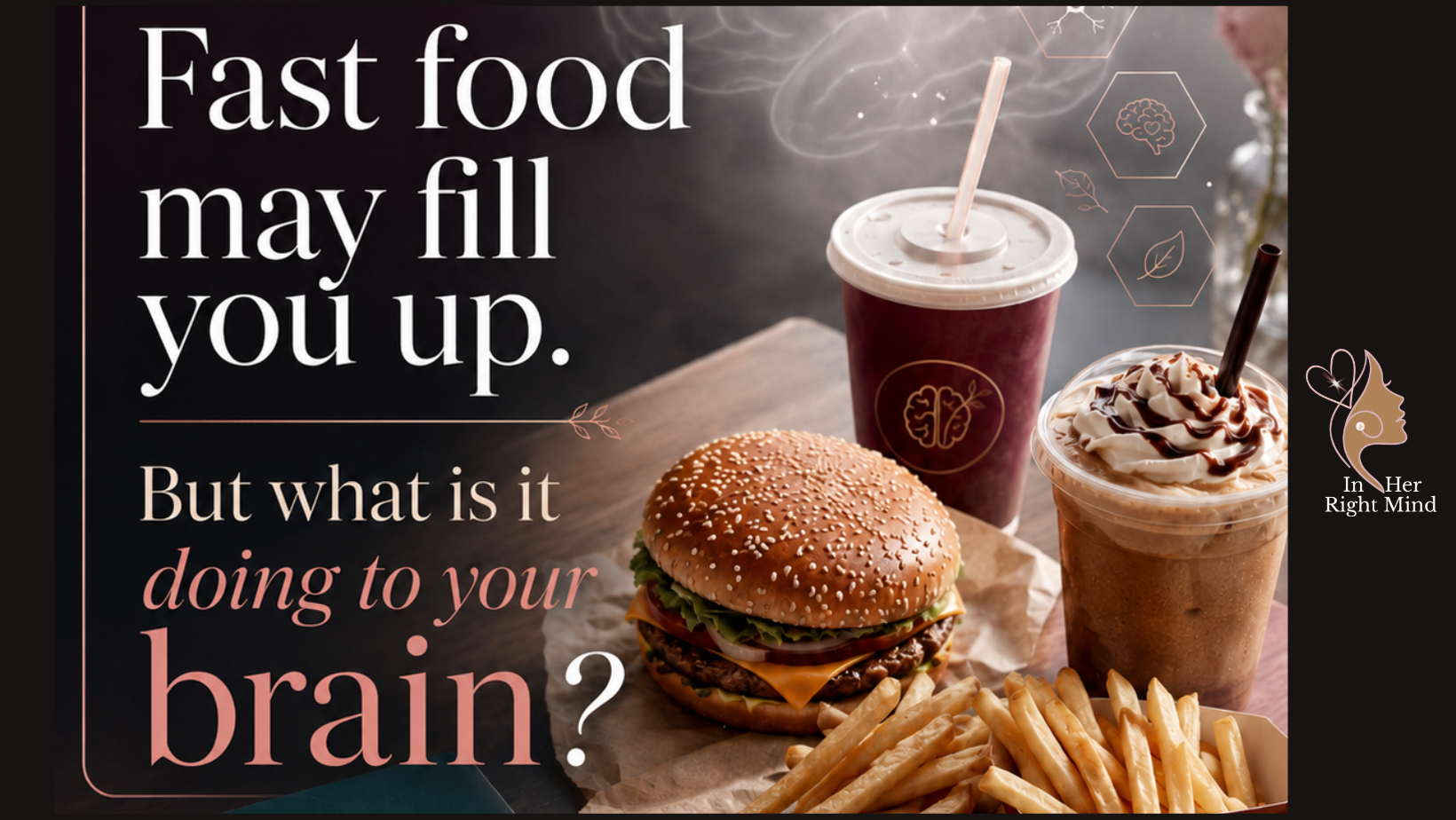
A Fast Food Mind?
I know that phrase may sound a
little spicy, but stay with me. When the brain is regularly fueled by foods
that spike blood sugar, crash energy, and crowd out nourishing choices, we
should not be surprised if we begin to notice changes in how we feel and
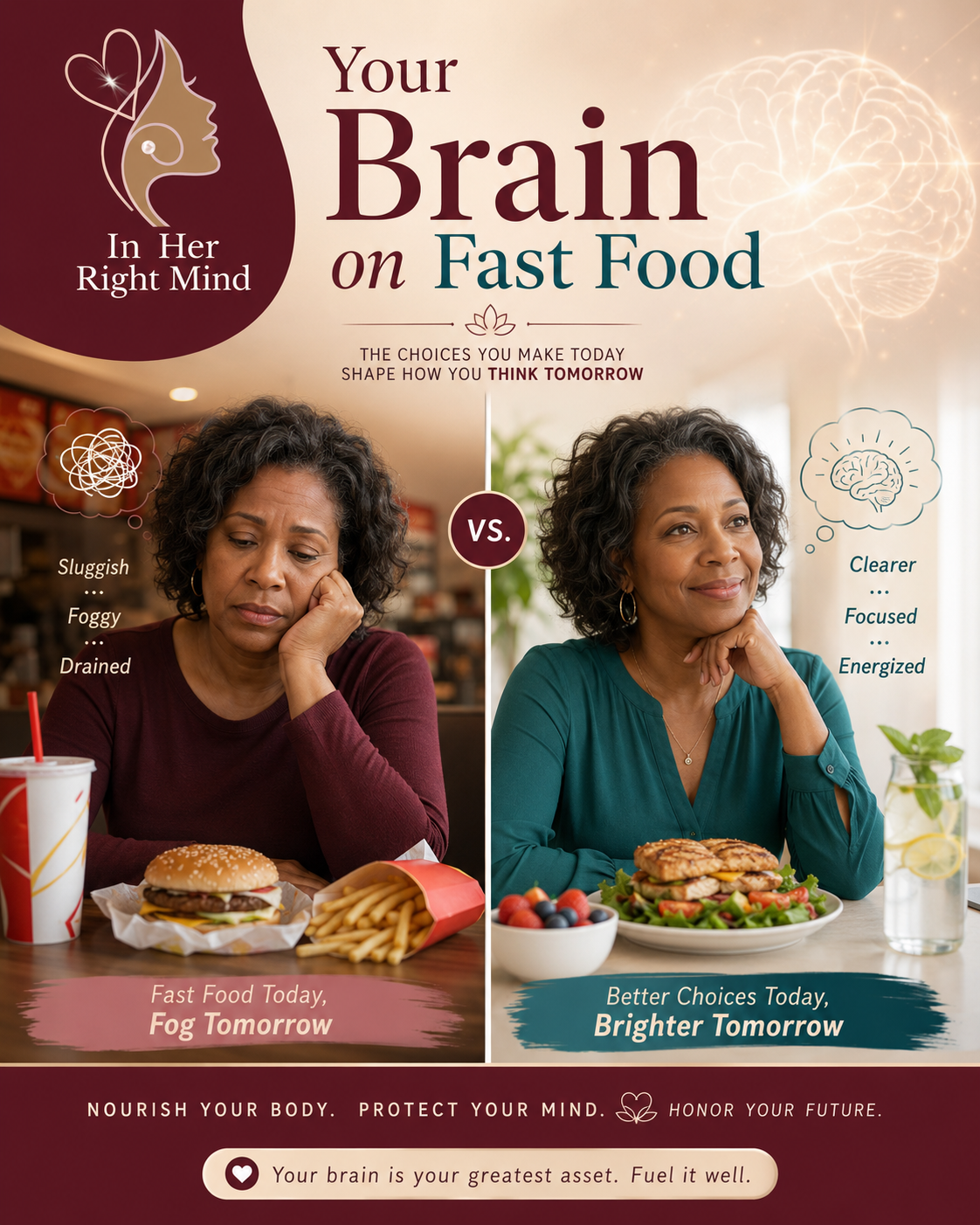
function. Have you ever eaten a fast-food-heavy meal and noticed that afterward
you felt: Foggy? Sluggish? Sleepy? More irritable? Less focused? Hungry again
sooner than you expected?
Here is what I am not saying. I am
not saying one order of fries causes depression. I am not saying one soda
creates a mental health crisis. And I am definitely not saying attention
problems or mood disorders can be reduced to a hamburger.
But I am saying this: Our food
patterns can either support the brain or work against it.
In one large prospective study of
more than 31,000 middle-aged women, those who consumed the highest amounts of
ultra-processed foods had a greater risk of developing depression over time
than those who consumed the lowest amounts. Another prospective study found
that higher consumption of sugar-sweetened beverages was associated with a
higher risk of depression. These studies show association, not simple cause and
effect, but they strengthen the case that what we regularly eat and drink
belongs in the mental health conversation.
What Do You Notice About Your
Brain?
Let’s have practical discussion. Instead
of treating fast food like a harmless default, I want you to become curious
about your own brain. The next time you eat a meal that is fried, sugary, and
highly processed, pay attention afterward. Ask yourself: How is my energy? How
is my mood?
How is my focus? Do I feel satisfied or just full? Do I feel clear or sluggish?
Am I craving more sugar or salt a little later? This is not about food guilt,
it is about body awareness.
Sometimes we are so used to pushing
through fatigue, brain fog, irritability, and energy crashes that we never stop
to ask whether our daily food choices are contributing to how we feel.
And during Mental Health Awareness
Month, I believe that question belongs on the table.
Mental Health Is Also Built in
Everyday Choices
Two weeks ago, I wrote that mental
health is brain health too. This week, I want to take that truth one step
further: Brain health is shaped by the ordinary choices we repeat.
What we eat and drink often
matters. How often we rely on convenience matters. Research does not support
simplistic statements like “fast food causes every mental health problem.” But
it does show that dietary patterns high in ultra-processed foods and sugary
drinks are associated with worse mental health outcomes, while food quality is
increasingly being studied as part of overall emotional and cognitive
well-being.
So no, food is not the whole mental
health story. Therapy definitely matters. Medication may matter. Trauma care
matters. Sleep matters. Stress management matters. Spiritual support matters. Community
matters. But food matters too. And we should stop acting like the brain is
somehow unaffected by what we feed it day after day.
The Real Problem May Be Lack of
a Plan
Here is the conviction I took away
from that late-night food search with my husband:
The best time to make a
brain-healthy food choice is before you are tired, starving, and out of
options. Because when we have not planned, convenience starts making
decisions for us.
That might mean: Keeping a better
snack in your bag or car. Drinking water before you get so hungry that every
drive-thru looks irresistible. Knowing a few “better available” options when
you are on the road.
Eating before a late evening event if you know you will be out past your usual
dinner time.
Keeping simple, quick food at home for nights when cooking is not going to
happen. I am not talking about perfection. I am talking about reducing the
number of times your brain has to live off whatever is quickest, crispiest,
sweetest, and most available. Convenience is not the same as care.
A Better Question
So the next time you find yourself
reaching for the easiest option, pause long enough to ask:
Am I feeding my brain, or am I
just filling my stomach? Sometimes the answer will be, “I am doing the best
I can tonight.” And grace belongs there. But if fast food has quietly become
your normal breakfast, your normal lunch, your normal dinner, your normal
snack, or your normal reward after a hard day, then maybe it is time to pay
attention. Not with shame but with wisdom. Your brain is working for you
all day long — helping you think, feel, decide, remember, regulate, and
respond. It deserves more than leftovers from your lack of planning.
This week, I want you to notice
your patterns. When do you reach for fast food most often?
When you are tired, rushed, unprepared, emotionally drained, out too late or
too hungry to think? And after you eat it, what do you observe about your
brain? Because the goal is not to live afraid of food. The goal is to live
aware of what helps you feel clear, steady, focused, and well.
Your brain is not asking for
perfection. But it does deserve your attention.
Blessings,
Dr. Janice R. Love
In Her Right Mind