I turned 65 this year.
And I’ve been thinking about a goal
I’ve carried since I turned 50: I want to grow old gracefully. Now let me tell you what that
phrase doesn’t mean (for me).It doesn’t mean pretending I’m 35. It doesn’t mean chasing youth like it’s the prize.
I still want to be in tip-top
shape—don’t get me wrong. I don’t want to be on a long list of medications just
to make it through the day. I want energy. I want strength. I want my body to
feel like a tool I can trust.
But aging gracefully… for me…
has always been bigger than the mirror.
It meant I wanted to be free—free
to use my time the way I wanted to. I wanted to be healthy enough to actually
enjoy my life, not just manage it. I wanted to be well—not just alive.
I wanted to have my own style and
show up in a way that felt like me. I wanted to be emotionally free—free
from people-pleasing, guilt, and performing. And most of all, I wanted to be
spiritually grounded—steady, wise, and at peace.
I remember reading Bob Buford’s
book Half Time years ago and thinking, What should the second
half of my life look like? Not just what would I do… but who would I
become?
That question shaped me more than I
realized. And turning 65 brought it back to the surface—especially when I
thought about my mother. Because I still remember when my mom turned 50.
I thought, That’s old.
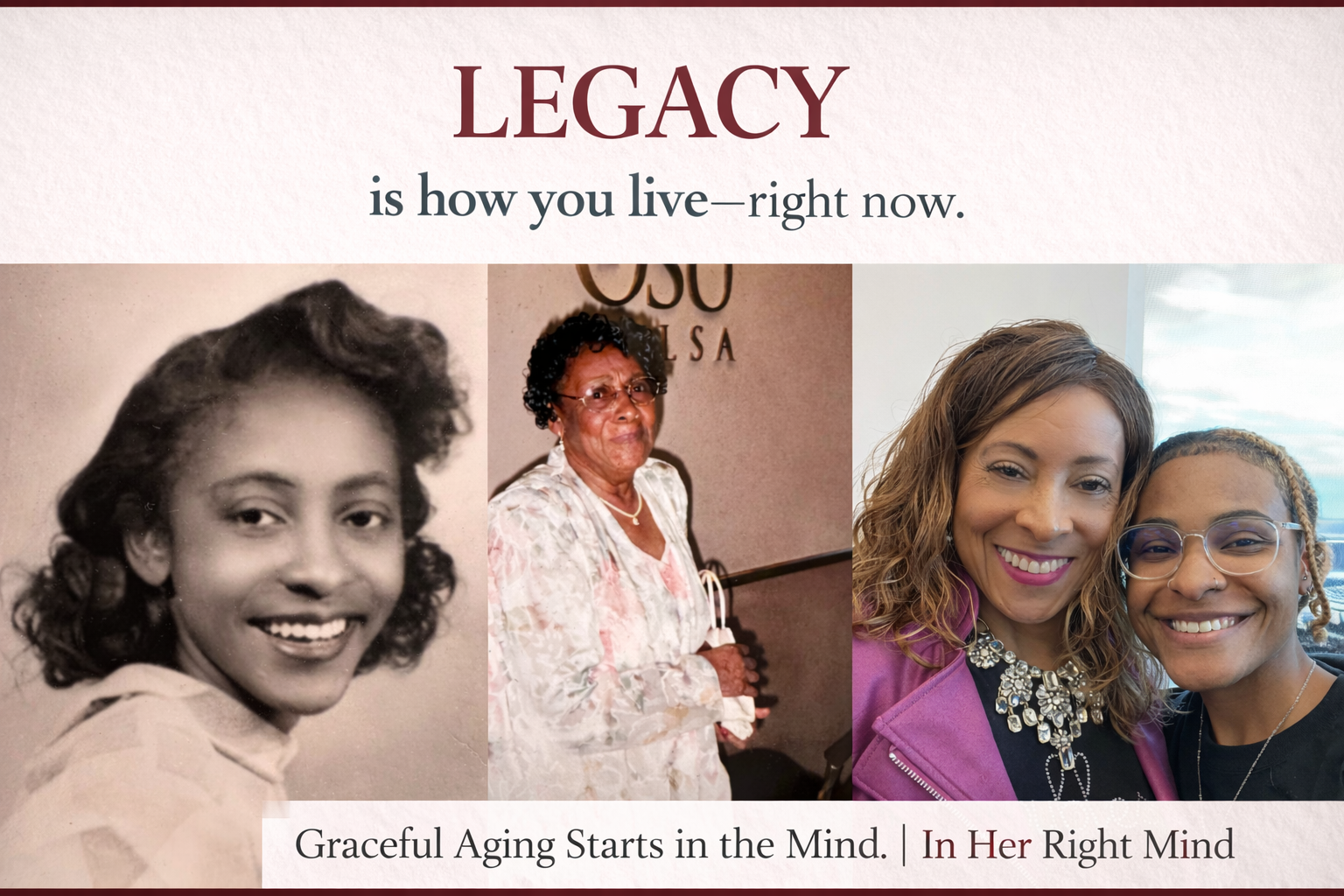
But when I think back, I truly
believe my mother aged gracefully. Not because she had a perfect life, but
because she seemed… content. She carried herself with a steadiness—like
she had made peace with her life and her season. And something else stands out
about my mom:
She did what she could to keep her
mind strong.
She knew Alzheimer’s was in the
family. Her father had it, and it frightened her. So she didn’t ignore that
fear—but she also didn’t let it rule her.
She did puzzle books.
She read her Bible.
She prayed.
She attended church.
She learned how to use a computer.
She volunteered to teach other
seniors how to use the computer.
Those might seem like small things,
but now I see them as what they really were:
acts of stewardship.
It was her way of saying, “I’m
going to do my part.” And honestly… I think that’s the part of aging gracefully
we don’t talk about enough.
We talk about skin.
Weight.
Hair.
Style.
But we don’t talk about the mind
behind the face.
Brain changes don’t wait until
we’re elderly. Research shows the brain’s overall volume can begin to
slowly decline in our 30s and 40s, and by midlife many women start
noticing the effects—especially when the rest of life is life-ing.
And for women, midlife often comes
with a “stack” of things that can intensify brain fog:
- hormone shifts (especially around
perimenopause/menopause)
- sleep disruption + stress load (hello, 2–4am
wake-ups)
- and weight/metabolic changes that can affect
long-term brain risk
So when women tell me, “I’m not
myself lately,” I don’t hear weakness.
I hear a signal. And I want you to hear this: Your brain may be tired—not
broken.

That hit even closer to home
recently because I completed my Welcome to Medicare check-up—my official
“65” milestone appointment. And part of that visit included a cognitive
screening. That test didn’t scare me… but it did make me pause.
It reminded me that brain health
isn’t something we should only think about when something is wrong. It’s
something we protect because we have a life to live.
A calling to walk out.
People we love.
A legacy to leave.
So here’s what I want to offer you
today—not fear, not pressure—just wisdom and a next step.
A simple check-in:
If your brain could talk, would it
say:
“I’m supported”… or “I’m running on fumes”?
Growing old gracefully doesn’t mean
you never struggle. It means when something feels off, you don’t ignore it—you
support it. And if my mother taught me anything, it’s this:
You don’t have to control the
future to be faithful in the present. You just have to do your part—one wise
step at a time.
With you,
Dr. Janice
Faith-Centered Brain Health Coach for Midlife Women