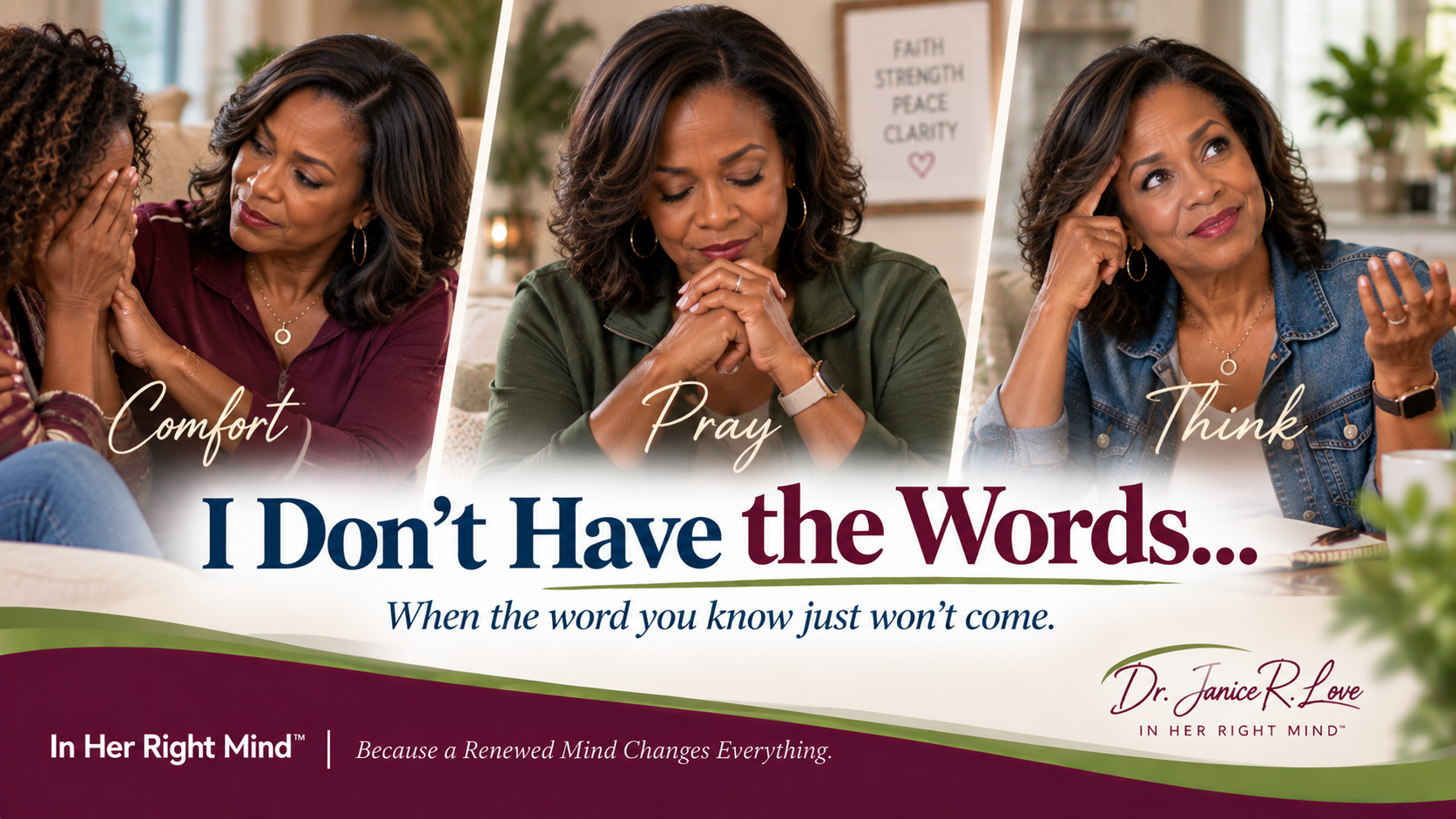
“I don’t have the words.” How many times have you
said that?
Sometimes we say it when someone we love is going through
something difficult. A death. A diagnosis. A disappointment. A situation so
painful that everything we think about saying sounds inadequate.
We want to help or make things better and want to say something
profound that will bring comfort. But sometimes there simply are no words. So
we sit with them, hug them, maybe bring them food. We send a card or we show
up. Sometimes our presence says what our words cannot.
Then there are times when we are the ones who don't
have the words. We are hurting, confused, afraid, angry or exhausted. We start
to pray, but the words won't come. All we can manage is, “Lord help.” Maybe
that’s enough especially if you are familiar with Romans 8:26 which reminds us that
there are times when “we know not what we should pray for as we ought,”
but the Spirit helps us in our weakness. This reminds me that even when I don't
have the words, God knows what's in my heart.
But then there is another kind of “I don't have the
words.” And this one can make a midlife woman stop in her tracks.
You Know...That Thing!
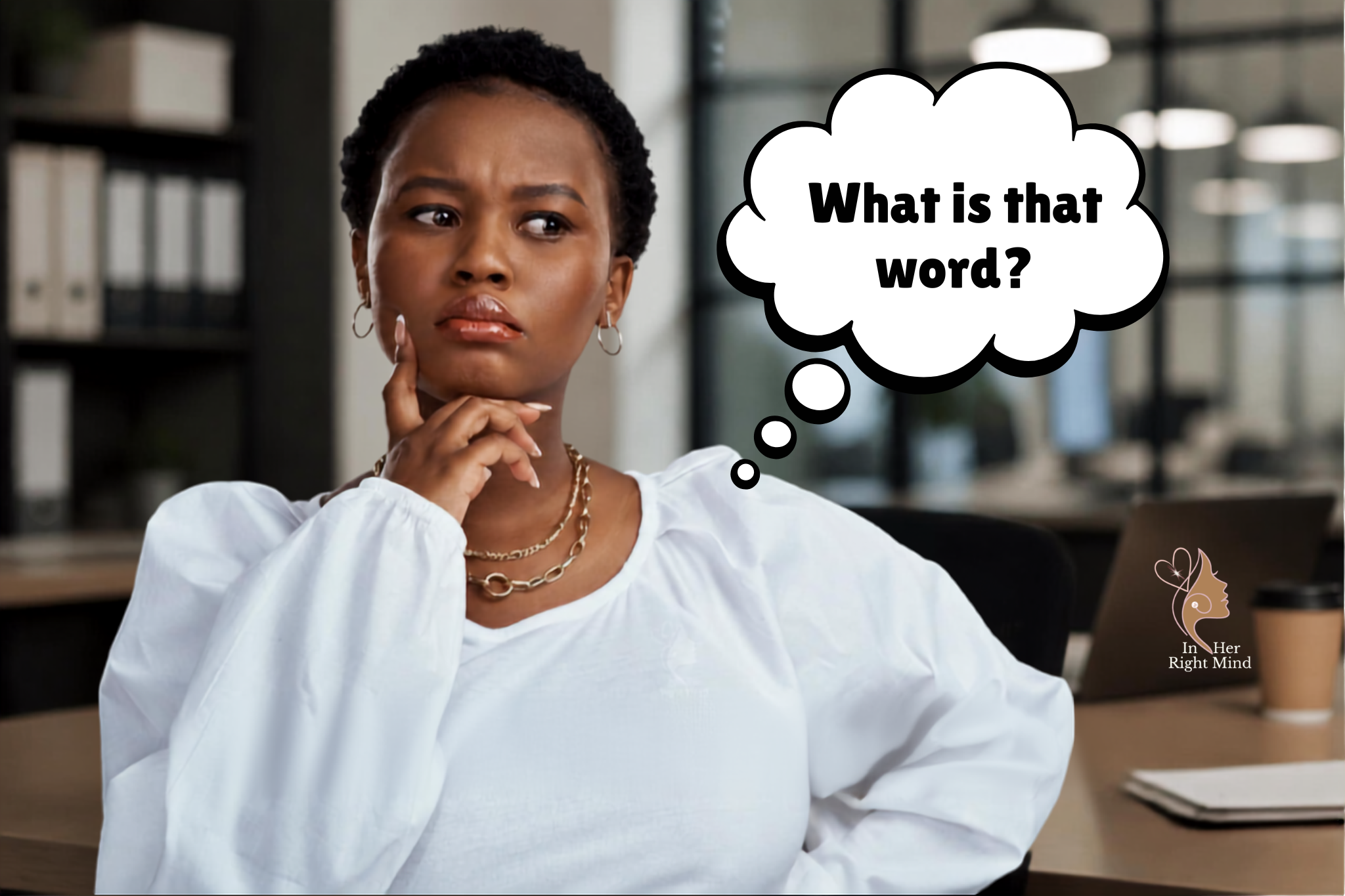
You're talking to somebody and suddenly the word you want
disappears. It’s not even a complicated word. It’s a word that you have
probably used hundreds of times. You can see the object in your mind, you know
what it does, and you know exactly what you want to say.
But the word will not come.
“Hand me the…the…” Nothing. “You know, the thing that…” Still
nothing. “That thing-a-ma-jig.” Or maybe you're talking about someone you've
known for years. You can see her face. You can even remember where you met her.
You may even know where she works and might remember her husband's name. But her
name? Gone.
Then two hours later, while you're folding clothes or
brushing your teeth: MELANIE!
Where were you two hours ago, Melanie? If you're in midlife
and this has happened to you, you may have had another thought immediately
afterward: Should I be worried about this?
When the Word Is There, But You Can't Get to It
There's actually a name for this experience: the tip-of-the-tongue
phenomenon. The information may still be stored in your brain. You're
simply having difficulty retrieving it at that moment. Think of it like knowing
there's something in a filing cabinet but not being able to put your hand on
the right folder. The folder isn't necessarily gone. It just isn't coming out
when you want it.
These word-retrieval moments can become more common as we
age. And they can become even more noticeable when we're tired, stressed,
distracted, overwhelmed or trying to do too many things at once. That's
important because an occasional word-finding problem does not, by
itself, mean you are developing dementia. Let me say that again for the woman
who forgot somebody's name yesterday and has been worried about it ever since.
Forgetting a word or name occasionally does not
automatically mean something is wrong with your brain. But I also don't
want us dismissing every cognitive change with, “Oh, I'm just getting older.” The
better question is: What is normal for me, and has something changed?
Do You Still Know What It Is?
Here's one distinction that can be helpful. Suppose you're
standing in the kitchen and can't remember the word spatula. You say: “Give
me that thing I use to scrape cornbread and cake mix out of the bowl.” You
can't retrieve the word spatula, but you know exactly what the object is
and what it's used for.
That's different from looking at the spatula and not knowing
what it is, what it's called or what you're supposed to do with it. Or perhaps
you run into someone and temporarily can't remember her name. That's different
from not recognizing someone you know well. The difference matters. Sometimes
the problem is retrieval—getting information you know out of storage. Other
times, changes may involve more than simply retrieving a stubborn word. That's
why patterns matter.
What's Normal—and What Deserves Attention?
Occasionally struggling to retrieve a familiar word or name
can happen with normal aging. So can needing a little more time to remember
something. And if the name suddenly pops into your head three hours later,
that's usually a pretty good indication that the information was still there.
But pay attention if word-finding difficulties are becoming
more frequent, noticeably worsening, interfering with everyday conversations or
making it difficult to do things you normally do. Pay attention if you're
frequently having trouble understanding familiar words, following conversations,
communicating your thoughts or using words correctly. And pay attention when
people who know you well begin noticing significant changes too. Those are
things worth discussing with a healthcare professional.
There is also one situation where we don't wait and see. If
difficulty speaking, understanding speech or finding words comes on suddenly,
particularly with symptoms such as facial drooping, weakness or numbness on one
side of the body, severe headache, dizziness or difficulty walking, seek
emergency medical attention. Sudden language difficulty can be a sign of
stroke. There is a big difference between: “What was her name again?” and
“Something has suddenly changed in the way she communicates.”
Sometimes It's Not Just Memory
If you are a midlife woman, listen closely. We tend to blame
memory for everything, but memory doesn't work alone. Before you can remember
something, your brain first has to pay attention to it. Think about how
often we're doing two or three things at the same time.
We're listening to somebody while checking a text. We're
putting our keys down while thinking about tomorrow's meeting.
We're being introduced to someone while scanning the room
for somebody else. Then later we say: “I can't remember where I put my keys.” Or:
“I am terrible with names.” Maybe.
But sometimes the problem isn't that your brain couldn't
remember the information. Your brain never got your full attention long
enough to properly take it in. Sleep, stress, and hydration matter. So does
hormonal changes. Medications, nutrition, physical activity, and our overall
health can affect how we feel and function. This is why I keep saying: Your
brain doesn't live by itself. Taking care of our memory means paying
attention to the whole woman.
If you've been reading my recent blogs, you've
probably noticed that I keep coming back to this idea:
Learn your normal.
Not
because I want us analyzing every forgotten word. I don't want you panicking because you walked upstairs and
forgot why you went up there. And I definitely don't want every woman over 50
diagnosing herself with dementia because somebody's name wouldn't come to her
at church Sunday morning.
But I do want us paying attention. How often is this
happening? Is it becoming more frequent?
Does it happen more when you're tired? What about when
you're stressed? Are you trying to multitask? Are you sleeping well? Do the
words usually come back later? Is it interfering with your everyday life? Has
somebody close to you noticed a change? Those questions help us move from fear
to awareness and there's a difference.
That's Why We're Doing the Bootcamp
This is exactly the kind of conversation I want us having
during my 14-Day In Her Right Mind: Midlife Memory and Focus Renewal
Bootcamp, beginning October 4th. We're not spending 14 days worrying about dementia.
We're spending 14 days learning how to better support the brains we have right
now. We'll look at some of the everyday factors that can influence memory
and focus. We'll practice strategies for paying better attention, remembering
information and supporting cognitive health.
Most importantly, I want you to begin noticing your own
patterns. Because the goal isn't perfection. The goal isn't remembering every
name, never misplacing your keys or always having the perfect word ready at
exactly the right moment. The goal is becoming more intentional about caring
for your brain as you age.
Maybe You Don't Have the Words
Sometimes you don't have the words because someone is
hurting. Show up anyway. Sometimes you don't have the words because your
own heart is hurting. Pray anyway. Even if all you can say is, “Lord help…”
And sometimes you don't have the words because the name of
that thing you're staring at has apparently decided to hide somewhere in your
brain. Don't panic.
Give yourself a minute. Pay attention to the pattern. Support
your brain. And if something seems significantly different from your normal,
don't be afraid to ask questions. Because getting older doesn't mean we're
going to remember everything. But getting older also doesn't mean we should
stop paying attention to how we're remembering. And sometimes, just when you've
given up trying to remember...
MELANIE! There she is.
Let's keep learning how to get—and stay—in our right
minds as we age.
Blessings,
Dr. Janice R. Love
In Her Right Mind