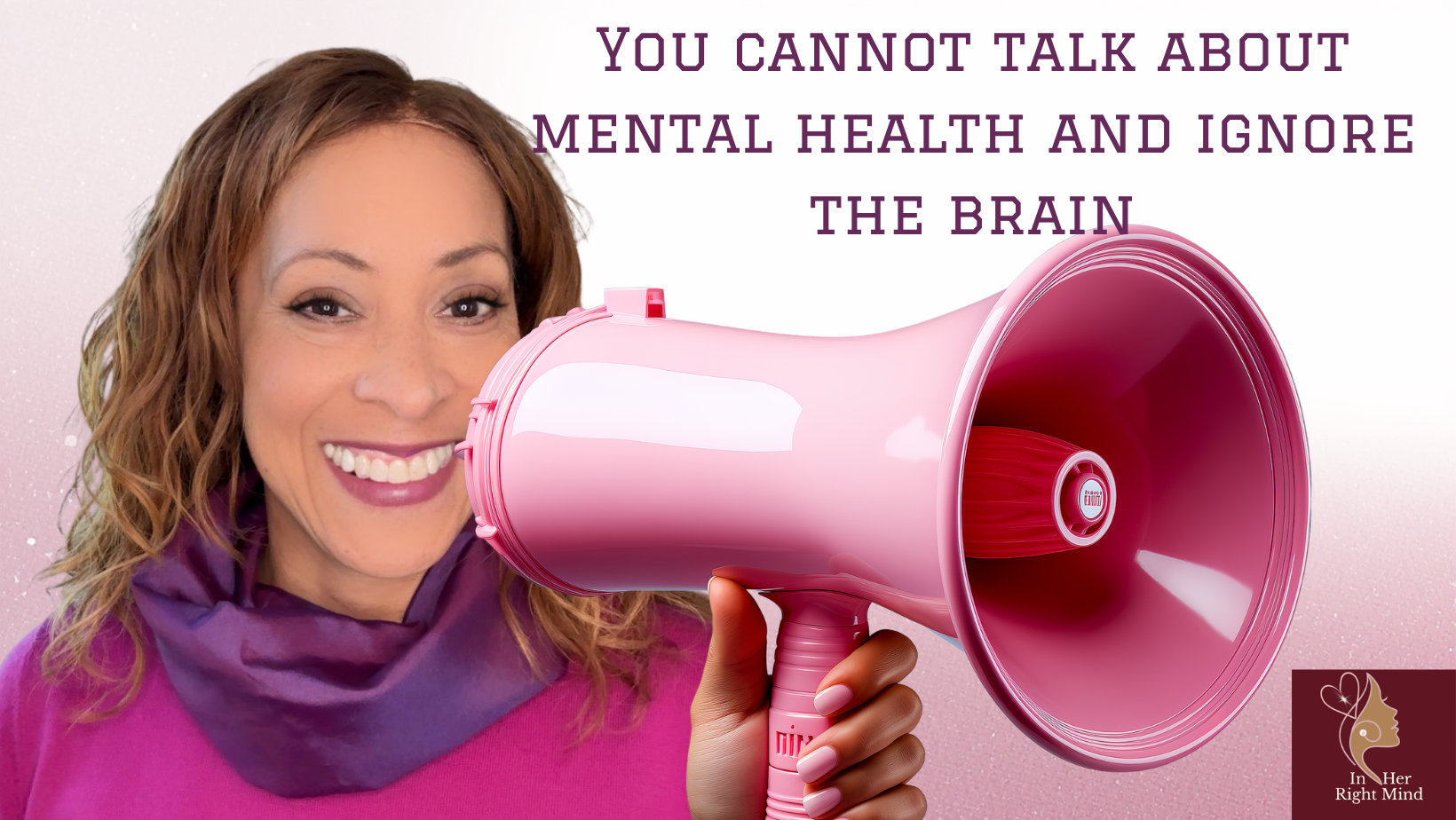
Mental Health Awareness Month is
coming, and I am thankful we are having more honest conversations about
anxiety, depression, stress, trauma, burnout, grief, and emotional well-being.
But this year, I want to bring
another part of the conversation to the table. Brain health.
Because, you cannot talk about
mental health and ignore the brain.
Your mental health is not floating
somewhere outside your body. It is deeply connected to the brain that helps you
think, feel, sleep, focus, remember, make decisions, regulate emotions, manage
stress, and respond to life.
So this Mental Health Awareness
Month, let’s tell the truth: we cannot keep talking about mental health while
ignoring the brain that is helping us manage it all.
Your brain is not separate from
your mental health. It is central to it.
And for many midlife women, this is
the part we have not been taught to consider. We have been taught to pray about
it, push through it or even sleep it off. All the while keep serving,
producing, smiling and showing up for everybody else.
And yes, prayer matters. Faith
matters. Counseling matters. Support matters. Medication may matter. Rest
matters. But so does your brain.
We have separated what was never
meant to be separated.
Most of the time, when we talk
about mental health, we talk about it in emotional terms.
We talk about worry, sadness, anxiety,
depression, stress, burnout, grief, trauma, and overwhelm. All of that matters,
but your brain is involved in every one of those experiences.
Your brain helps regulate your
mood. It helps calm your nervous system. It helps you sleep. It helps you
focus. It helps you remember. It helps you make decisions. It helps you recover
from stress.
So when we talk about mental
health, brain health cannot be treated like an afterthought. It belongs in the
middle of the conversation. Because sometimes what we call, “I’m just tired,”
“I’m overwhelmed,” “I can’t focus,” “I’m not myself,” or “I must be losing it”
may actually be a brain and body signal saying, “I need support.” Do not
consider that a weakness, it is wisdom.
Midlife makes this conversation
even more important
Now let’s talk about midlife for a
minute. Because midlife has a way of making a woman question herself. You walk
into a room and forget why you went in there. You lose your words in the middle
of a sentence. You feel more emotional than usual. You get irritated faster.
You cannot multitask like you used to. You feel mentally tired even when your
calendar does not look that full.
And before you start calling
yourself crazy, lazy, forgetful, or “not what you used to be,” pause.
Your brain may be asking for a
different kind of support.
Your hormones may be shifting. Your
sleep may be changing. Your stress load may be heavier than you realize. Your
nervous system may be tired of living on high alert. Your body may be holding
years of caregiving, working, leading, grieving, serving, and carrying things
no one else even noticed.
Here is the reality for midlife
women. Some women are not falling apart, they are overloaded. Some women are not weak, they are
worn down. Some women are not losing themselves, they are finally hearing the
signals their brain and body have been sending for years.
Faith does not cancel brain care
As women of faith, many of us know
how to believe and definitely how to pray. We know how to quote and
meditate on Scripture. We know how to encourage somebody else even when we are
tired ourselves. But sometimes we have been taught, directly or indirectly,
that if we are struggling mentally or emotionally, it must mean we are not
praying enough, trusting enough, believing enough, or strong enough.
But here is the truth, caring for
your brain is not a lack of faith, it is stewardship.
A renewed mind still needs rest. A
peaceful spirit still needs sleep. A joyful heart still needs nourishment. A
woman of faith still needs support. God gave you a brain. It is not unspiritual
to learn how to care for it. Sometimes the most faithful thing you can do is
stop shaming yourself and start supporting the body and brain God gave you.
Brain care is mental health care
Brain care does not have to be
complicated it can start with simple, honest questions:
Am I sleeping enough?
Am I drinking enough water?
Am I eating in a way that supports my brain?
Am I moving my body?
Am I living in chronic stress without recovery?
Am I giving my brain quiet time?
Am I asking for help when I need it?
Am I pretending I am okay because everybody expects me to be strong?
This is where mental health and
brain health meet real life. Because a tired brain can make life feel heavier
than it really is. An overwhelmed brain can make simple decisions feel
complicated.
A stressed brain can keep your body
on high alert even when the danger has passed. A poorly rested brain can make
your emotions louder and your patience shorter. So before you shame yourself,
ask what your brain may be trying to tell you.
We need a wider conversation
This Mental Health Awareness Month,
I want us to widen the conversation.
Yes, let’s talk about therapy and
prayer which I do with all of my clients. Let’s talk about stress, grief,
depression, anxiety, and burnout. Let’s talk about support systems and safe
spaces. Let’s even talk about medication when it is needed. But let’s also talk
about the brain. Because the woman who wants to think clearly, feel emotionally
steady, sleep better, focus longer, and walk in peace needs more than
encouragement. She needs understanding, support and practical tools. She needs permission to stop pushing through
warning signs. She needs to know that caring for her brain is part of caring
for her whole self.
Mental health is brain health
too. And caring for your brain may be one of the most loving things you do
for your mind, body, and spirit.
This week, I want you to pay
attention to what your brain may be telling you.
Not with fear, shame or
self-criticism, but with compassion. When you feel foggy, tired, irritable,
overwhelmed, distracted, or emotionally drained, don’t just ask, “What is wrong
with me?”
Instead ask yourself the question,
“What kind of support does my brain need right now?”
That one question may change how
you care for yourself in this season. Because you are not just trying to make
it through. You are learning how to live, think, feel, and age in your right
mind.
Blessings,
Dr. Janice R. Love
In Her Right Mind