You forgot where you put your
phone. Again. You walked into a room knowing exactly why you went in there -
and came back out with nothing. You lost a word right in the middle of a
sentence. A word you know. And while you stood there trying to find it, a
little voice in the back of your head got louder.
Is something wrong with me?
If you are a woman in your fifties or
sixties experiencing moments like these, that fear is understandable. And it is
also, in the vast majority of cases, pointing at the wrong culprit entirely. You
are not losing your mind. Your brain is changing. And those two things are not
the same.
What Is Actually Going On
Your brain today is not the same
brain you had at thirty-five. That part is true. But what is driving the change
might surprise you.
Estrogen does a lot more
than most of us were ever told. Yes, it plays a role in reproduction. It also
plays a direct role in how your brain works. Estrogen helps your brain produce
the chemicals it needs to regulate your mood, your focus, and your memory. It
keeps blood flowing to your brain. It helps protect your brain cells.
When estrogen levels start to drop
during perimenopause and menopause, your brain feels it. That is not something
going wrong. That is your brain adjusting to a new normal. The forgetfulness,
the fog, the trouble concentrating, the words that suddenly disappear
mid-sentence - all of that has a real, biological explanation. It is common. It
is connected directly to the hormonal shift your body is going through. And it
is not the beginning of dementia.
It is perimenopause. And knowing
that changes everything.
What Your Doctor May Have Missed
Nobody in my family talked about
this. My mother never explained what was coming. My grandmother never gave me a
heads up. The closest thing I ever heard was a quick reference to "going
through the change" - said in that tone that let you know grown folks were
talking and you needed to go somewhere else.
The one menopause story I actually
remember was about a woman who thought she had already gone through the change
and found out she was pregnant instead. That story got told. Everything else stayed
quiet. So when my own brain started acting differently, I had nothing to go on.
No warning. No roadmap. Just fear and a lot of unanswered questions.
And honestly, that experience is
not unique.
Most women get to midlife without
anyone ever explaining what hormonal change actually does to the brain. Hot
flashes, yes. Irregular periods, maybe. But the memory stuff? The fog? The way
you are thinking just feels different some days? That rarely gets a straight
explanation. So women fill the silence with worry.
They search online for things they
are too scared to say out loud. They laugh off the moments that actually
frighten them. They tell people they are just tired, just stressed, just busy.
All the while carrying a question
they cannot shake. Is my mind okay?
For Black women, this silence cuts
even deeper. The healthcare system has a long history of not listening to Black
women, not taking their symptoms seriously, and not giving them the full
picture. Midlife brain changes are no different. When doctors are not asking
the right questions - or not really hearing the answers - Black women are left
to figure it out on their own.
You deserve better than that.
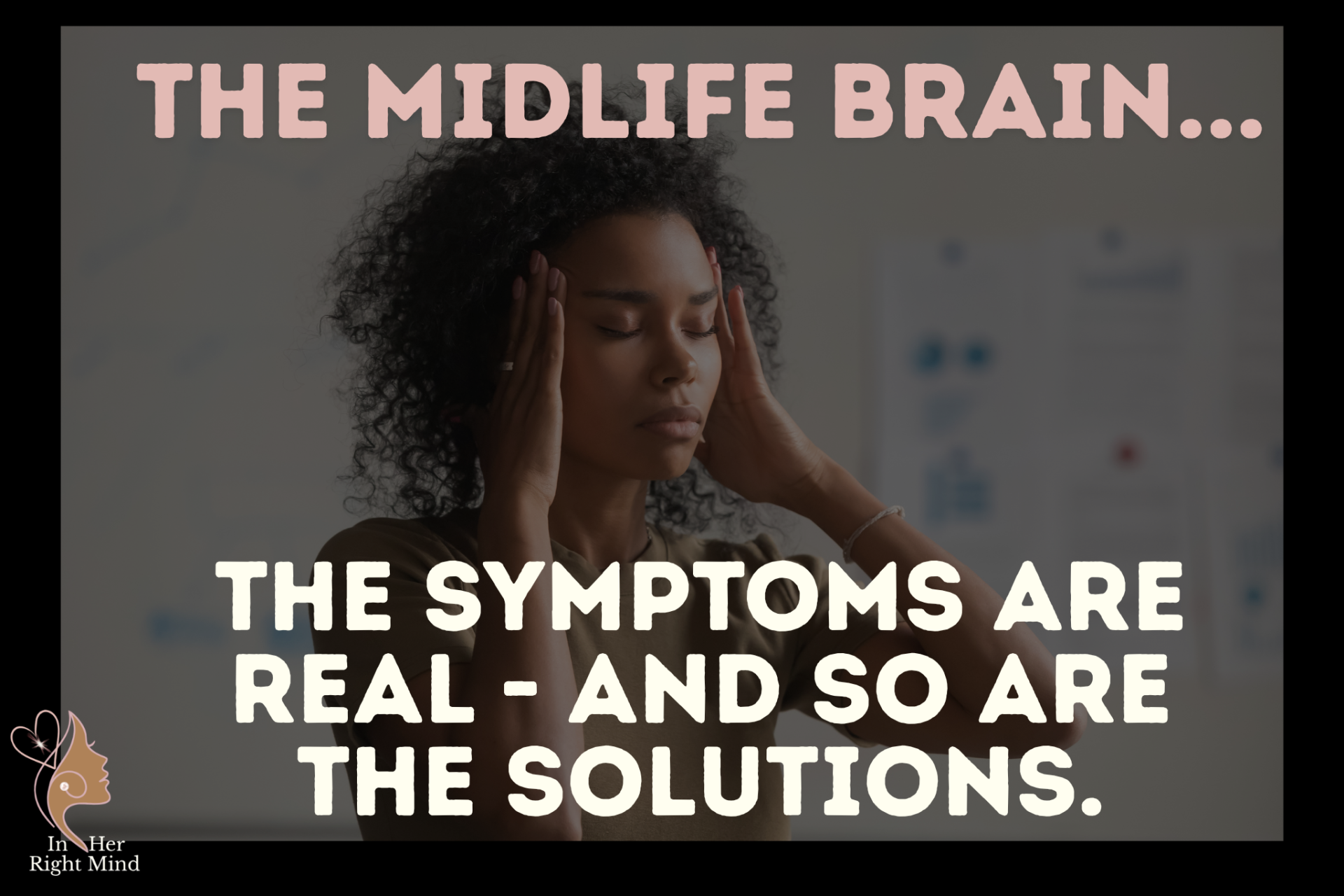
The Symptoms Are Real - And So
Are the Solutions
Understanding the hormonal
connection does not mean you just accept the fog and move on. It means you
finally know what you are dealing with - and you can do something about it.
The research is clear. Women who
take care of their brains during this transition do better. Sleep matters. What
you eat matters. How you handle stress matters. Movement matters. The way you
talk to yourself about your own mind matters. Your brain keeps its ability to
grow and change your entire life. Scientists call it neuroplasticity. Hormonal
shifts affect that process. They do not shut it down.
You do not need a prescription to
start supporting your brain better. You need the right information and a plan
that actually fits your life.
What Your Brain Can Still Do
Here is the part fear tends to
drown out. Yes, some things shift in midlife. Finding words can take a beat
longer. Short-term memory needs a little more support. And your brain right now
also carries something it did not have at twenty-five. Years of experience.
Deep people skills. The ability to read a room, see a situation clearly, and
make decisions with a wisdom that only comes from actually living life. Researchers
call this crystalized intelligence - and it gets stronger with age.
You are not working with a weaker
mind. You are working with a different one. A mind that needs different support
than it used to - and that responds when it gets it.
You Deserve Real Answers
Too many women move through this
season without ever getting a straight answer about what is happening to them.
They carry the fear alone. They manage the symptoms alone. They decide this is
just what getting older feels like.
It does not have to be that way.
When you understand what your brain
is actually doing, you get something back. You get your power. The ability to
make real choices, build real habits, and move through this season with
confidence.
Your mind is not failing you. It is
asking for something it has always deserved.
Your full attention. And the right
support.
Blessings,
Dr. Janice R. Love
In Her Right Mind