As we approach the July 4th weekend
and the nation’s 250th birthday, I found myself thinking about another major
birthday celebration: The 1976 Bicentennial, just 50 years ago. The United
States of America celebrated with flags, fireworks, coins, calendars, parades,
school programs, and all kinds of national celebrations.
But here is what made me smile.
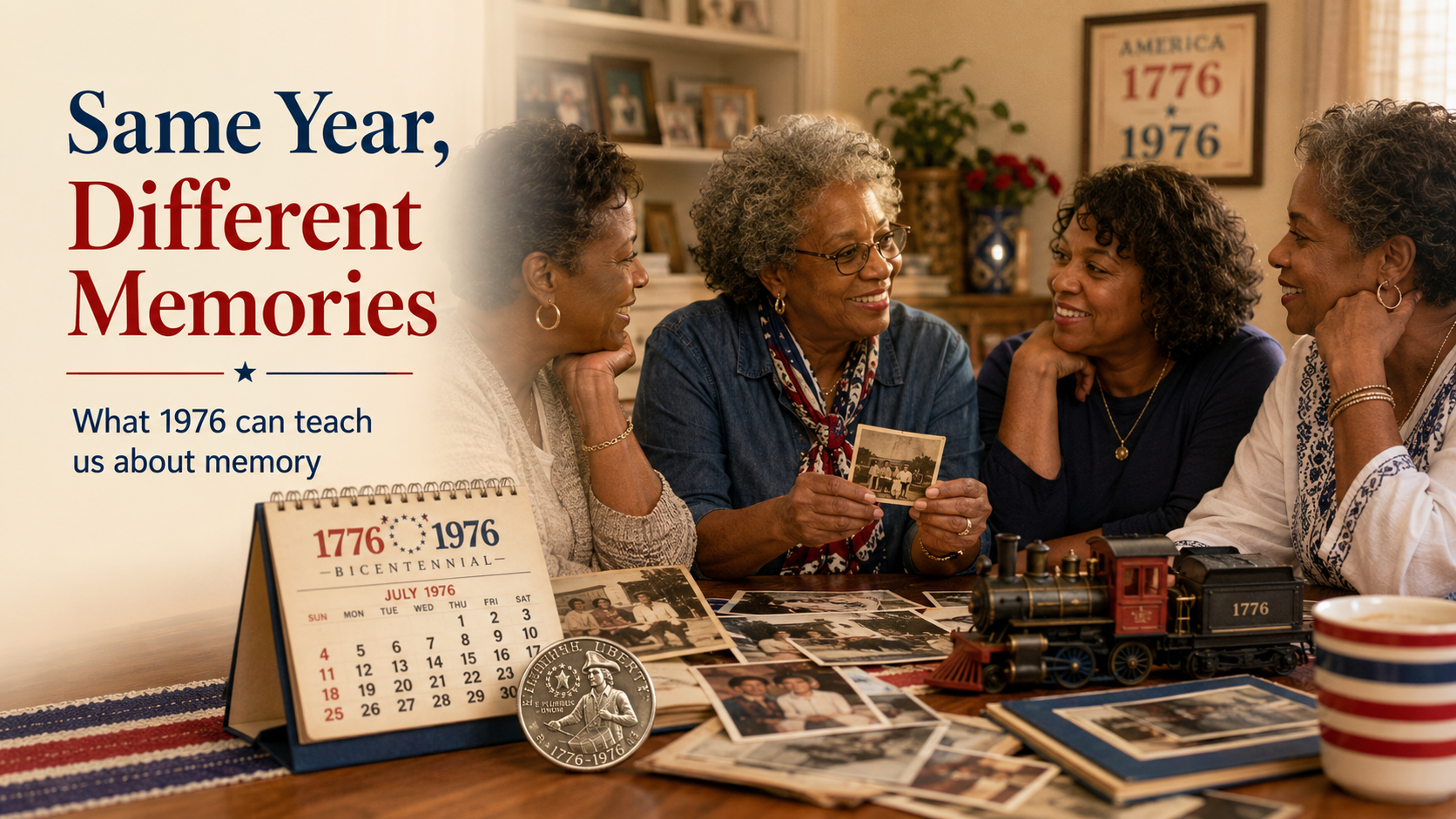
When I talked with my sisters about
what we remembered from 1976, we all remembered something different. One of my
sisters was about to enter her senior year in high school.
Another sister was entering her second
year of college. I was going into my sophomore year in high school. And when I
tried to remember the Bicentennial itself, the main thing that came to mind was
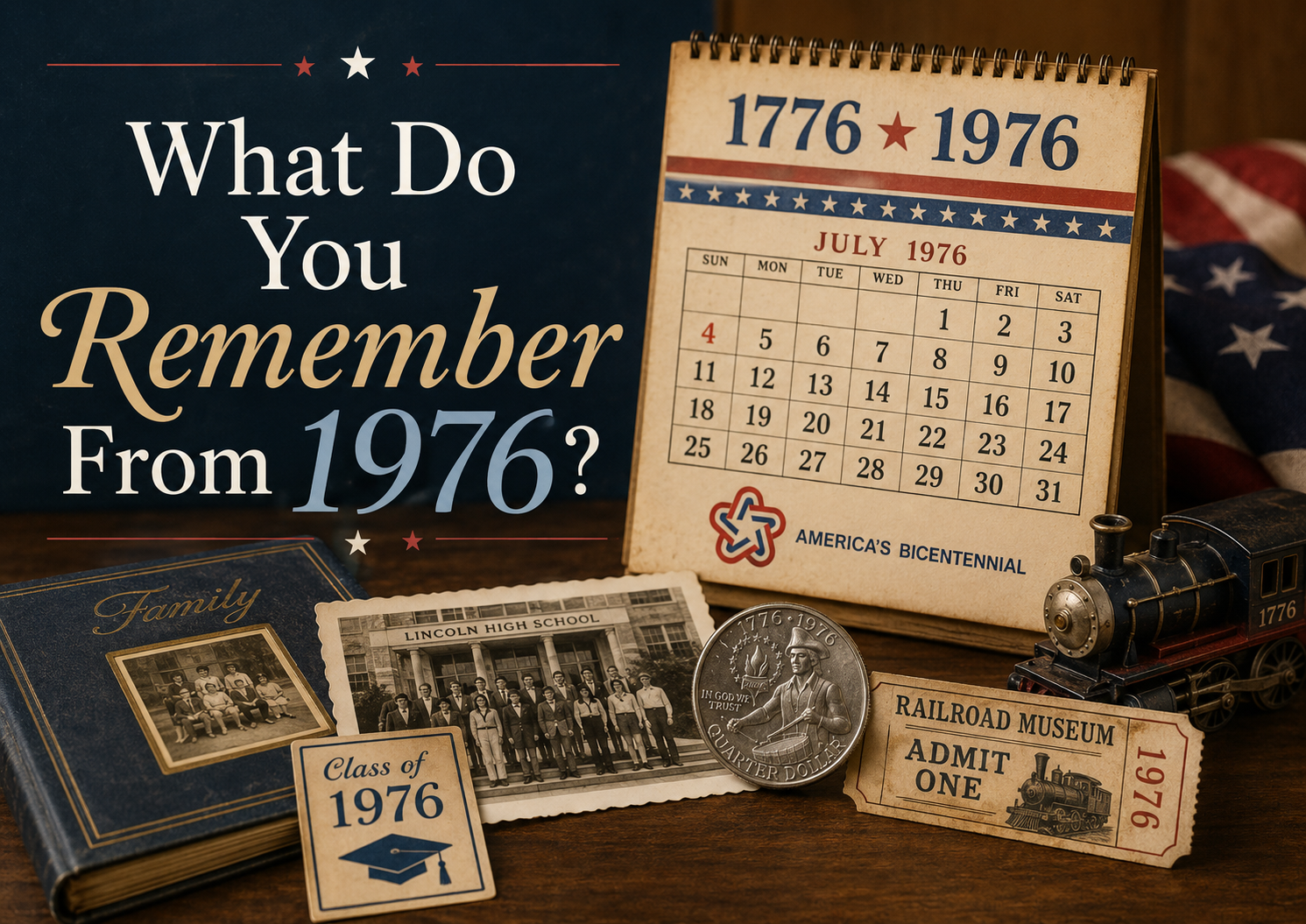
a calendar we had on the wall that had two years on it, both 1776 and 1976.
That was it.
A calendar, not a big parade. Not a
major historical speech or a grand patriotic moment. A calendar on the wall. My
youngest sister remembered some kind of Bicentennial train museum or exhibit.
My husband remembered the Bicentennial quarter because 1976 was the year he
graduated from high school.
Same year, same national celebration,
but different memories. And that made me think about how personal memory really
is. We can live through the same season, the same holiday, the same family
gathering, the same national event, and walk away remembering different things.
One person remembers the decorations,
while another remembers the music. One person remembers the food. One person
remembers who was there. One might remember the grade they were in, while
another remembers the car the family drove. One person remembers the feeling
while one person remembers nothing at all.
That does not automatically mean
something is wrong with our memory.
It may mean our brains attached
meaning to different things. Memory is not a perfect recording. It is not a
video camera that captures every moment and stores it in order.
Memory is selective. Our brains tend
to hold on to what had meaning, emotion, repetition, attention, identity, or
connection.
That is why my husband remembers the
Bicentennial 50 cent piece. It was tied to the year he graduated from high
school. That was not just a coin to him, it was connected to a milestone.
That is why my sister may remember the
train museum. It was unusual. It stood out. It gave her brain something
specific to hold on to.
That is why I remember the calendar.
Maybe I saw it every day. Maybe the dates 1776 and 1976 stood out to me. Maybe
the calendar was repeated enough in my environment that it became my memory
hook. And maybe I do not remember more because I was going into my sophomore
year of high school, and like many teenagers, I may have been more focused on
my own world than on the historical significance of the moment.
That is not a failure, that is human. Sometimes
we remember what mattered to us personally more than what mattered
historically. The history book may say, “1976 was the Bicentennial.”
But my brain says, “There was a
calendar on the wall.” My sister’s brain says, “There was a train museum.” My
husband’s brain says, “There was a 50 cent coin, and that was the year I
graduated.”
Same year, different memory hooks.
That is one of the reasons I love
talking about memory. It reminds us that memory is not just about facts. It is
about connection. We remember through meaning, people, places, objects and
music and even smells. We remember through milestones, or what was repeated. We
especially remember through what
interrupted the ordinary. And sometimes, we remember through whatever our brain
decided was worth saving at the time.
This is also why we need to be careful
about judging ourselves too quickly when we cannot remember something. Sometimes
we say, “I should remember that.” But should we? Was it meaningful to us at the
time? Were we paying attention? Was it repeated? Was it connected to a person,
place, object, or feeling? Were we distracted? Were we overwhelmed? Were we too
young to understand the importance of the moment? Were we focused on something
else that felt more immediate?
Those questions matter.
Because sometimes what we call
forgetting is really a sign that the memory never had a strong hook in the
first place. And sometimes the hook is not what we expected. For me, the hook
was not the Bicentennial as a national event. It was a wall calendar. That
calendar became the doorway into the memory.
That is how memory works, it often
needs a doorway. And once the doorway opens, other memories may begin to come
with it. That is why family conversations are so powerful.
Asking what others remember helps the
memory to become fuller, not because one person remembered everything, but
because everyone brought a piece. That is not just nostalgia, that is
connection, storytelling, legacy and brain stimulation.
So ask yourself or someone else the
following questions.
·
“What do you remember about that year?”
·
“What was happening in your life then?”
·
“Who was around?”
·
“What did our family do?”
·
“What story have I never heard?”
One person’s memory may be another
person’s blank spot. One person’s detail may help another person fill in a gap.
One person’s story may unlock something someone else had forgotten. That is why
we do not need to shame ourselves when we cannot remember every detail. We can
get curious instead.
This holiday weekend, create memories.
Because the memories we create now may become the stories someone tells later. And one day, someone may say, “I do not
remember everything about that July 4th weekend 2026, but I remember…” That is
worth thinking about. Memory is not only about what we can pull from the past,
it is also about what we are planting in the present. So this July 4th weekend,
as the nation remembers 250 years, I invite you to remember your own story too.
Have a wonderful and safe holiday
weekend.
Blessings,
Dr. Janice R. Love