
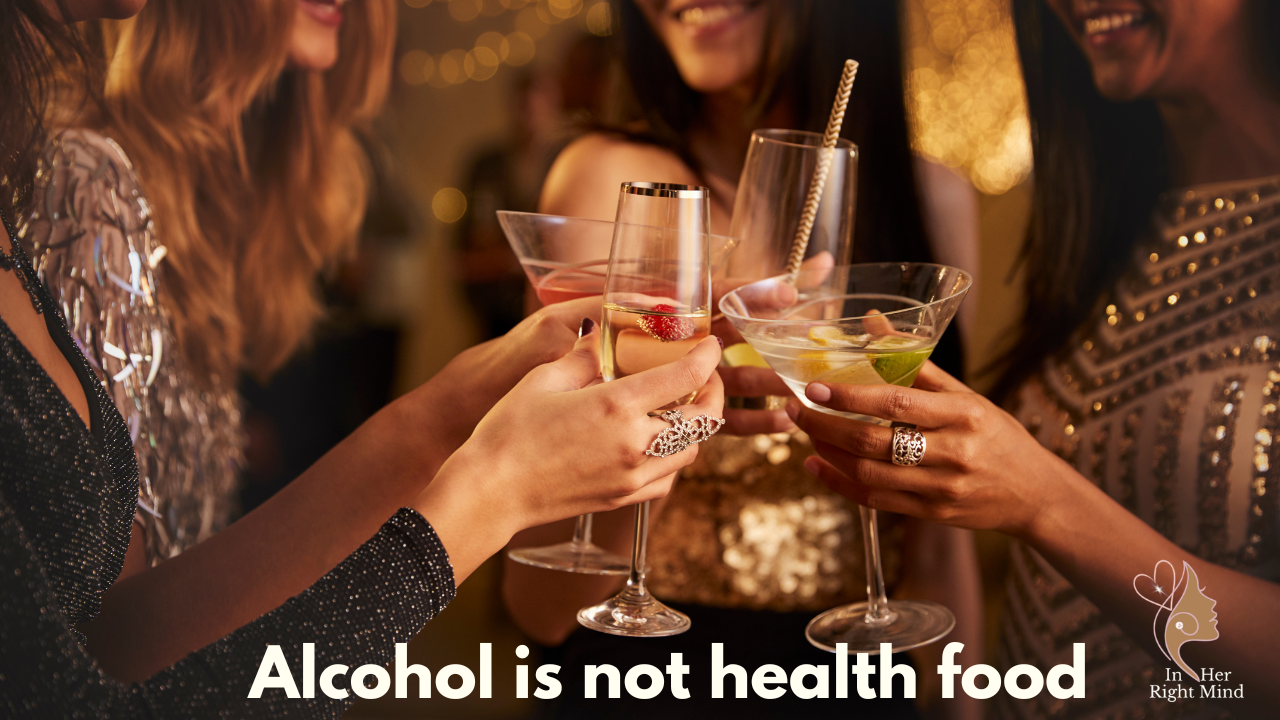
This week, in honor of National Alcohol Screening Day on April 9, I want to talk honestly about alcohol and the brain. Alcohol is often marketed as harmless, helpful, or even healthy, but it can interfere with memory, judgment, mood, and emotional well-being. This is your reminder to pause, reflect, and take an honest look.
Alcohol is often talked about like it is harmless, sophisticated, relaxing, or even somehow good for you. A little wine to “unwind.” A drink to “take the edge off.” A cocktail to celebrate making it through the week.
But alcohol is not health food and the brain pays attention to every sip.
The National Institute on Alcohol Abuse and Alcoholism says alcohol interferes with the brain’s communication pathways and can affect the way the brain looks and works. It makes it harder for the areas of the brain responsible for balance, memory, speech, and judgment to do their jobs.
That means the issue is not just whether someone is “drunk.” The issue is what alcohol is doing to thinking, mood, decision-making, and emotional stability along the way.
For some people, alcohol clouds judgment enough to make decisions they would not normally make. It lowers inhibitions, weakens impulse control, and can open the door to reckless behavior. NIAAA notes that critical decision-making abilities can be diminished before a person even shows the obvious outward signs of intoxication. That is one reason I call excessive alcohol use a home wrecker.
Not because every person who drinks is out of control, but because alcohol has a way of quietly tearing at the very things people say they value most. It can contribute to poor judgment, strained relationships, emotional instability, conflict at home, and choices that leave lasting damage. The CDC notes that alcohol use is linked with mental health conditions such as depression and anxiety, memory problems, and relationship problems with family and friends.
And let’s talk about memory. Alcohol can impair memory in the moment, and in more serious cases it can lead to blackouts, which are gaps in memory for events that happened while a person was intoxicated. NIAAA warns that alcohol-induced blackouts are associated with a sharply increased risk of injuries and other harms.
So when people laugh off a night they “barely remember,” that is not a cute story. That is a warning sign. This matters for women in midlife too. The CDC says alcohol can lead to a quicker decrease in mental functioning among women compared with men. That should make us stop and think.
Alcohol is often talked about like it is harmless, sophisticated, relaxing, or even somehow good for you. A little wine to “unwind.” A drink to “take the edge off.” A cocktail to celebrate making it through the week.
But alcohol is not health food and the brain pays attention to every sip.
The National Institute on Alcohol Abuse and Alcoholism says alcohol interferes with the brain’s communication pathways and can affect the way the brain looks and works. It makes it harder for the areas of the brain responsible for balance, memory, speech, and judgment to do their jobs.
That means the issue is not just whether someone is “drunk.” The issue is what alcohol is doing to thinking, mood, decision-making, and emotional stability along the way.
For some people, alcohol clouds judgment enough to make decisions they would not normally make. It lowers inhibitions, weakens impulse control, and can open the door to reckless behavior. NIAAA notes that critical decision-making abilities can be diminished before a person even shows the obvious outward signs of intoxication. That is one reason I call excessive alcohol use a home wrecker.
Not because every person who drinks is out of control, but because alcohol has a way of quietly tearing at the very things people say they value most. It can contribute to poor judgment, strained relationships, emotional instability, conflict at home, and choices that leave lasting damage. The CDC notes that alcohol use is linked with mental health conditions such as depression and anxiety, memory problems, and relationship problems with family and friends.
And let’s talk about memory. Alcohol can impair memory in the moment, and in more serious cases it can lead to blackouts, which are gaps in memory for events that happened while a person was intoxicated. NIAAA warns that alcohol-induced blackouts are associated with a sharply increased risk of injuries and other harms.
So when people laugh off a night they “barely remember,” that is not a cute story. That is a warning sign. This matters for women in midlife too. The CDC says alcohol can lead to a quicker decrease in mental functioning among women compared with men. That should make us stop and think.
National Alcohol Screening Day

Copyright © 2026
Created with