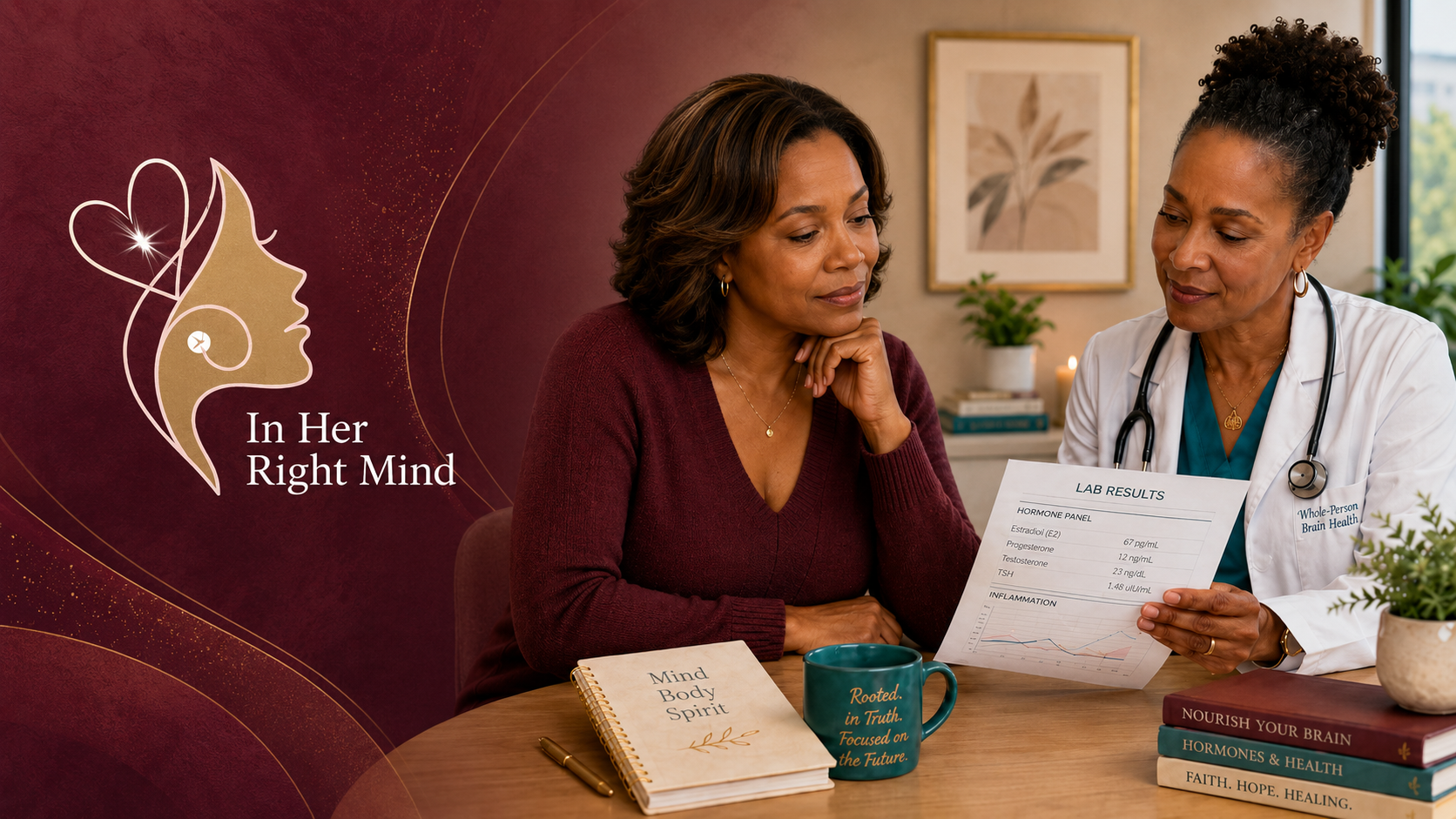
I went to my doctor to review my
lab results. You know how that goes. You sit there while they go through the
numbers, and you try to act like you understand every single thing on the
screen. Some things I expected and some things I had questions about. But then
my doctor told me my estrogen level was at zero.
Zero.
Now, I knew enough to understand
why estrogen that mattered for my bones. I have heard the conversations about
menopause, estrogen, bone density, osteoporosis, and fracture risk. That part
made sense to me. But then she said something else. She mentioned that HRT
might also be helpful for my memory.
Yes, I understood bones. But
memory? That is when I had to pause. My
first thought was, “Wait a minute. What’s estrogen got to do with memory?”
I left that appointment thankful,
but also a little frustrated. Thankful because this doctor took the time to
explain. Frustrated because I wondered why I had not had this conversation
before.
This was not the first time I had
labs done. The numbers had been there before. But this was the first time
someone slowed down enough to help me connect the dots.
How many women have lab results
sitting in a chart that they do not fully understand?
How many of us are told,
“Everything looks fine,” or “That’s normal for your age,” when what we really
need is someone to explain what is changing, what matters, what does not, and
what questions we should be asking?
That sent me looking on what my
children call a “mama research project” And the more I read, the more I
realized that estrogen is not just about reproduction, hot flashes, night
sweats, and whether or not we are still having cycles. Estrogen also has a
relationship with the brain.
Now, I am not telling every woman
to run out and ask for HRT. I am not saying HRT is a magic memory pill and I’m not
saying hormones are the answer for every woman. But I am saying this: the
conversation may be worth having.
Because many women in midlife are
noticing changes. They are forgetting words and walking into rooms and
wondering why they came in. They are having trouble focusing and feeling mentally
foggy. They are not sleeping well and are more anxious than usual. They feel
like their brain is not as sharp as it used to be. And too often, they are told
some version of, “Well, you’re just getting older.”
But what if there is more to the
story?
What if memory, sleep, hormones,
mood, stress, and the brain are all having a conversation with each other — and
we are only listening to one part of it?
When estrogen levels decline during
menopause, some women experience brain fog, memory complaints, sleep
disruption, mood changes, and difficulty concentrating. Researchers are still
studying the relationship, but the connection between menopause symptoms,
estrogen, hormone therapy, and cognitive health is important enough that
clinicians are being encouraged to discuss it with women.
That does not mean every memory
problem is hormonal, and it does not mean estrogen fixes everything. And it
definitely does not mean HRT is the right choice for every woman. But it does
mean that when we talk about memory in midlife, hormones should not be left out
of the conversation.
That was my takeaway. Not, “Go get
hormones.” But, “Ask better questions.” I think that matters because
many of us have been trained to separate our symptoms into little boxes. Bones
go in one box. Sleep goes in another box. Mood goes in another box. Memory goes
in another box.
Hot flashes go in another box. Stress goes in another box. But the body does
not always work in separate boxes.
The brain is connected to the
body.
The body is connected to hormones.
Hormones can affect sleep. Poor sleep can affect memory. Stress can affect
focus. Thyroid issues can affect thinking. Blood pressure, blood sugar,
medication, grief, anxiety, depression, and inflammation can all play a role
too. That is why “I’m forgetting things” deserves more than a quick dismissal. It
deserves a real conversation.
Too many of us have learned to push
through symptoms instead of investigate them. We normalize exhaustion. We
minimize hot flashes. We laugh off brain fog. We pray, press, perform, and keep
moving.
I feel like I need to say this
here: I believe in prayer, but I also believe in asking the doctor some
questions. I believe in faith, but I also believe in reviewing the lab results.
I believe in strength, but I do not believe strength should require silence. So
when my doctor brought up HRT, bones, and memory, I did not leave that
conversation with a final answer.
I left with better questions. That may
be where some of us need to start.

Better questions to ask
If you are in midlife and noticing
memory changes, brain fog, poor sleep, hot flashes, mood changes, or just that
feeling of “I don’t feel like myself,” it may be time to ask your doctor:
·
Could hormones be part of what I am
experiencing?
·
What does my estrogen level mean for me?
·
Could menopause or post-menopause be affecting
my sleep, focus, mood, or memory?
·
Would HRT be appropriate for me based on my age,
symptoms, family history, and personal health risks?
·
What are the possible benefits for my bones,
sleep, hot flashes, mood, or quality of life?
·
What are the possible risks for me?
·
If HRT is not right for me, what are my other
options?
·
What else should we check before assuming this
is “just age”?
·
Should we look at thyroid, B12, vitamin D, iron,
blood pressure, blood sugar, medications, sleep, depression, anxiety, or
stress?
These are not rebellious questions.
These are responsible questions. And here is where I want us to stay balanced.
Hormone therapy is
considered one of the most effective treatments for hot flashes, night sweats,
and genitourinary symptoms of menopause, and it has been shown to help prevent
bone loss and fractures. But the risks and benefits vary depending on the
woman, the timing, the dose, the type, the route, the duration, and whether
progesterone is needed.
That means this is not a
one-size-fits-all conversation. Your sister’s answer may not be your answer and
your friend’s experience may not be your experience. Your favorite influencer’s
story may not apply to your body. Most importantly, your fear may not be the
best decision-maker either. We do not need hype nor do we need shame. We do not
need fear-based medicine or trend-based medicine. What we need are wise,
individualized conversations.
That is why I like the phrase: not
a magic pill, but a conversation worth having. Because when my doctor told me
my estrogen level was zero, I could have stopped at the bone conversation. I
could have nodded and moved on. But when she mentioned memory, I had to ask the
question.
Maybe more than I realized, maybe
not everything. But enough for me to ask and learn. Enough to stop pretending
that memory lives in a separate room from the rest of the body.
If this article leaves you with
anything, let it be this: don’t settle for vague answers when better
questions are needed.
So here is my encouragement this
week:
Do not diagnose yourself. Do not
let social media prescribe for you. Do not panic because you forgot a word. Do
not dismiss yourself because someone told you, “You’re just getting older.”
Ask the questions.
Bring up the symptoms. Review the
labs. Talk about your bones. Talk about your sleep. Talk about your mood. Talk
about your memory. Talk about your risks. Talk about your options.
Because your brain is not separate
from the rest of your body. And your body may be trying to tell a story that
deserves to be heard.
Blessings,
Dr. Janice R. Love
In Her Right Mind