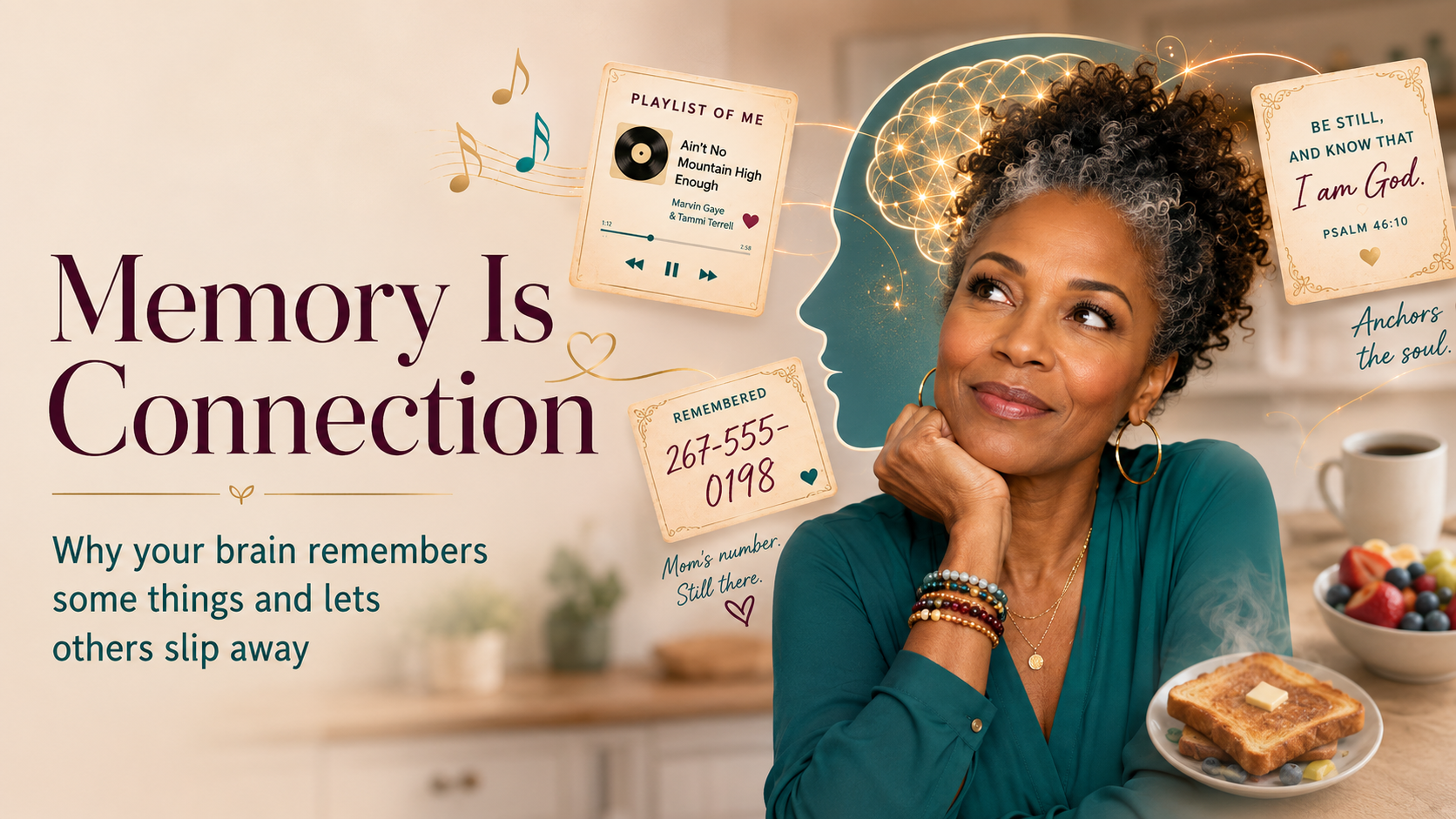
Isn’t it amazing how you can
remember the words to a song you have not heard in years, but you cannot always
remember why you walked into the room? You can remember your childhood phone
number and the address of the house you grew up in. You can even remember the
commercial jingle that came on TV when you were a child.
If you are anything like me, you
can remember the words to a song from your teenage years, including the
ad-libs, the background vocals, and the part where everybody in the room knows
to come in. But ask what you had for breakfast yesterday, and suddenly your
brain says, “Ma’am, we did not save that file.”
Your brain is something else. But
before we start panicking about what we forget, it may help to understand why
some memories stay with us for decades while other details slip away almost
immediately.
Memory is Not Just One Thing
We often talk about memory like it
is a storage closet, either something is in there or it is not. Either we
remembered it or we lost it. But the brain is much more complex than that. Your
brain does not treat every piece of information the same way.
Some memories stick because they
are connected to emotion. Some stick because they are connected to repetition. Some
stick because they are connected to rhythm. Some stick because they are
connected to meaning.
And some never stick at all because
we were not really paying attention when they happened.
That song from your teenage years
probably had more than words attached to it. It had a season attached to it. It
could be a hairstyle, school dance, a friend group, first crush, heartbreak, summer vacation, car ride or
simply a feeling. That is why music can take us back so quickly. You do not
just remember the lyrics. You remember who you were when you sang them. You
remember where you were and how you felt.
Your childhood phone number stayed
with you because you repeated it over and over again. You gave it to people.
You wrote it on forms. You heard your parents say it. You probably had to
memorize it before cell phones started doing all the remembering for us. It was
repetition that helped file it away.
Rhythm helped too. Phone numbers
often had a pattern to them. Songs definitely have rhythm. Prayers, scriptures,
poems, chants, cheers, and old sayings often stay with us because rhythm gives
the brain something to hold on to. That is why you may still remember a Bible
verse you learned as a child, a nursery rhyme, a school fight song, or a family
saying from decades ago.
Your brain likes patterns.
But breakfast? Breakfast may not
have had much emotion, rhythm, meaning, or attention attached to it. It may
have been routine. You may have eaten it while checking your phone, thinking
about your schedule, watching the news, answering a text, or rushing out the
door.
So your brain may not have treated
it as important. It may not have filed it deeply. It may have simply said,
“Nothing to see here.”
Now, this does not mean we should
ignore memory changes. If you or someone you love notices significant changes
in memory, confusion, getting lost, trouble managing familiar tasks, or changes
that interfere with daily life, it is wise to talk with a healthcare provider. But
every forgotten breakfast is not a diagnosis nor is every misplaced key dementia.
Every “Why did I come in this
room?” moment does not mean your brain is failing. Sometimes it means your
brain was distracted. It could mean your attention moved on before the memory
had a chance to settle. Sometimes it means you were doing too much at once. Sometimes
it means your brain filtered out ordinary information because it did not seem
important.
A lot of what we call memory
trouble is really attention trouble. We cannot remember what we never fully
paid attention to. If I put my glasses down while thinking about three
other things, I may not remember where I put them. Not because my brain is
broken, but because I never gave that action my full attention. If I walk into
a room and forget why I came in, it may be because my mind shifted to another
thought before I got there. If I read a paragraph three times and still do not
know what it said, it may be because my eyes were reading but my brain was
somewhere else. That is not just a memory issue. That is a focus issue.
In midlife, focus can be affected
by a lot of things such as: sleep, hormonal changes, grief, overload and dehydration.
It could also be too many tabs open in our brains, too many responsibilities, too
much multitasking, too much noise, or too little rest. So before we shame
ourselves for forgetting, we need to ask a better question: Was I actually
present when this happened? Did I give my brain a chance to receive the
information?
Was I rushing or distracted? Was I trying
to do three things at once? Was I emotionally overloaded or just tired? Was I
expecting my brain to perform without giving it care?
Instead of saying, “Something is
wrong with me,” we may need to say, “My brain needs support.” And that is a
very different conversation. The good news is that there are simple ways to
help your brain hold on to what matters. Slow down when you are doing something
you need to remember. Say it out loud. “I am putting my keys on the kitchen
counter.” “I am taking my medicine now.” “My appointment is at 10:30.” Writing
things down also helps. And no, writing it down does not mean your memory is
weak. It means you are wise enough not to make your brain carry everything by
itself.
Any new information has to connect
to something familiar. It’s a good idea to repeat what matters and use
routines. It doesn’t hurt to create visual cues. It is important that you limit
multitasking when you are doing something important. Do what works and give
your brain rhythm, meaning, and attention. And as always, please give yourself
some grace.
Your brain is not just a storage
unit. It is a storyteller, a pattern-maker, and a meaning-maker. It remembers
more than facts. It remembers feelings, rhythms, relationships, routines, and
the things that mattered enough to leave an imprint. That is why you may still
remember the song from your teenage years or may still remember your childhood
phone number. That is why one smell, one sound, or one phrase can take you all
the way back. And that is also why ordinary things can slip away when we are
tired, distracted, rushed, or overloaded.
What memories from childhood or
young adulthood still feel easy to recall?
What songs, scriptures, sayings, or
phone numbers do I still remember without trying?
What current things do I forget
most often?
Am I forgetting them because they
are unimportant, or because I am distracted when they happen?
Where do I need to slow down and
give my brain more attention, rhythm, repetition, or support?
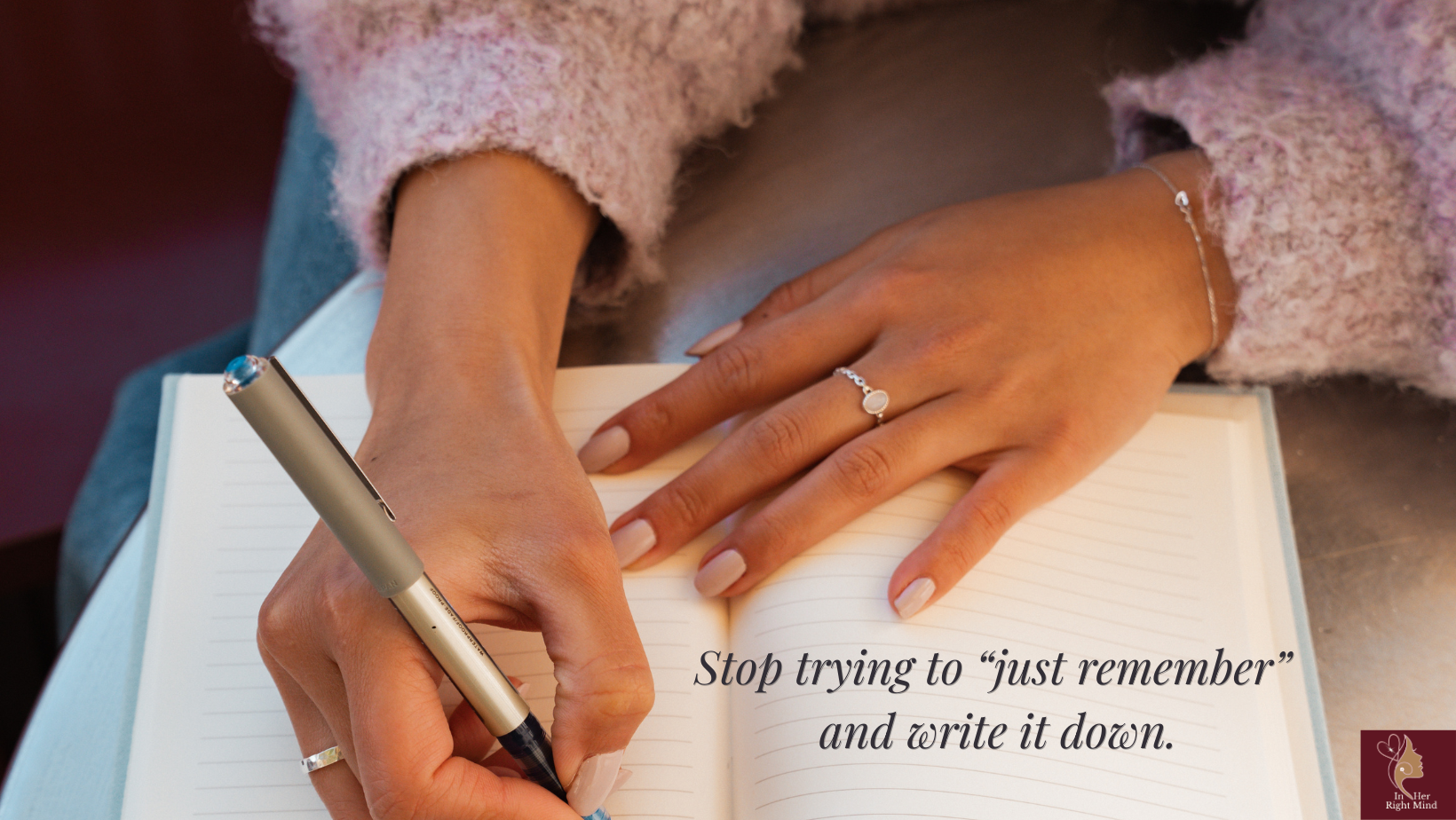
What is one thing I can stop trying
to “just remember” and start writing down with wisdom?
This month, we are continuing the
conversation about memory, focus, and the midlife brain.
Last week, we talked about how
memory is personal. This week, we are remembering that memory is also connected
to attention, emotion, rhythm, repetition, and meaning.
And next, we are going to talk
about something many of us are guilty of: Multitasking.
Hear me clearly, multitasking may
make us feel productive, but it may be quietly working against our focus and
our memory. So here is your gentle reminder for the week:
Your brain is not failing just
because it forgot breakfast. But it may be asking you to slow down, pay
attention, and stop making it carry everything all at once.
Blessings,
Dr. Janice R. Love