Friday, June 5th is
National Start Over Day, and that made me think about memory in a different
way. When we hear the words “start over,” we often think about beginning a new
routine, changing a habit, or restarting a project or goal we did not achieve. Buts
sometimes the place where we need to start over is not outside of us, but in the
way we remember ourselves.
For each of us, our memory is
personal. Memory is not just about remembering where you placed your keys, what
time your appointment starts, or why you walked into the kitchen. Memory also
holds our stories, our joys, our grief, our regrets, our lessons, our
disappointments, our growth, and sometimes the places where we still need
grace.
We remember what happened. We
remember what we wish we had said and what we wish we had not said. We remember
the opportunity we missed, the relationship we mishandled, the warning sign we
ignored, the season when we stayed too long, left too soon, spoke too harshly,
stayed too quiet, or simply did not know then what we know now.
Some memories do not just live in
our minds, they live in our emotions. We can be going about our day, minding
our business, and suddenly a memory shows up. All it might take is a song, a smell,
a picture, a name., a date on the calendar, or even a place we drive by. And
before we know it, we are right back there. Back in the same space, in the
conversation, in the moment, in the feeling.
That is why memory is not just
mental. It can be emotional, physical, and even spiritual. And if we are not
careful, we can confuse reflection with rehearsal. Reflection says, “What
did I learn?” Rehearsal says, “Let me punish myself again.” Reflection says,
“How did this shape me?”
Rehearsal says, “This is who I am.”
Reflection says, “What wisdom can I carry forward?”
Rehearsal says, “You should be
ashamed.”
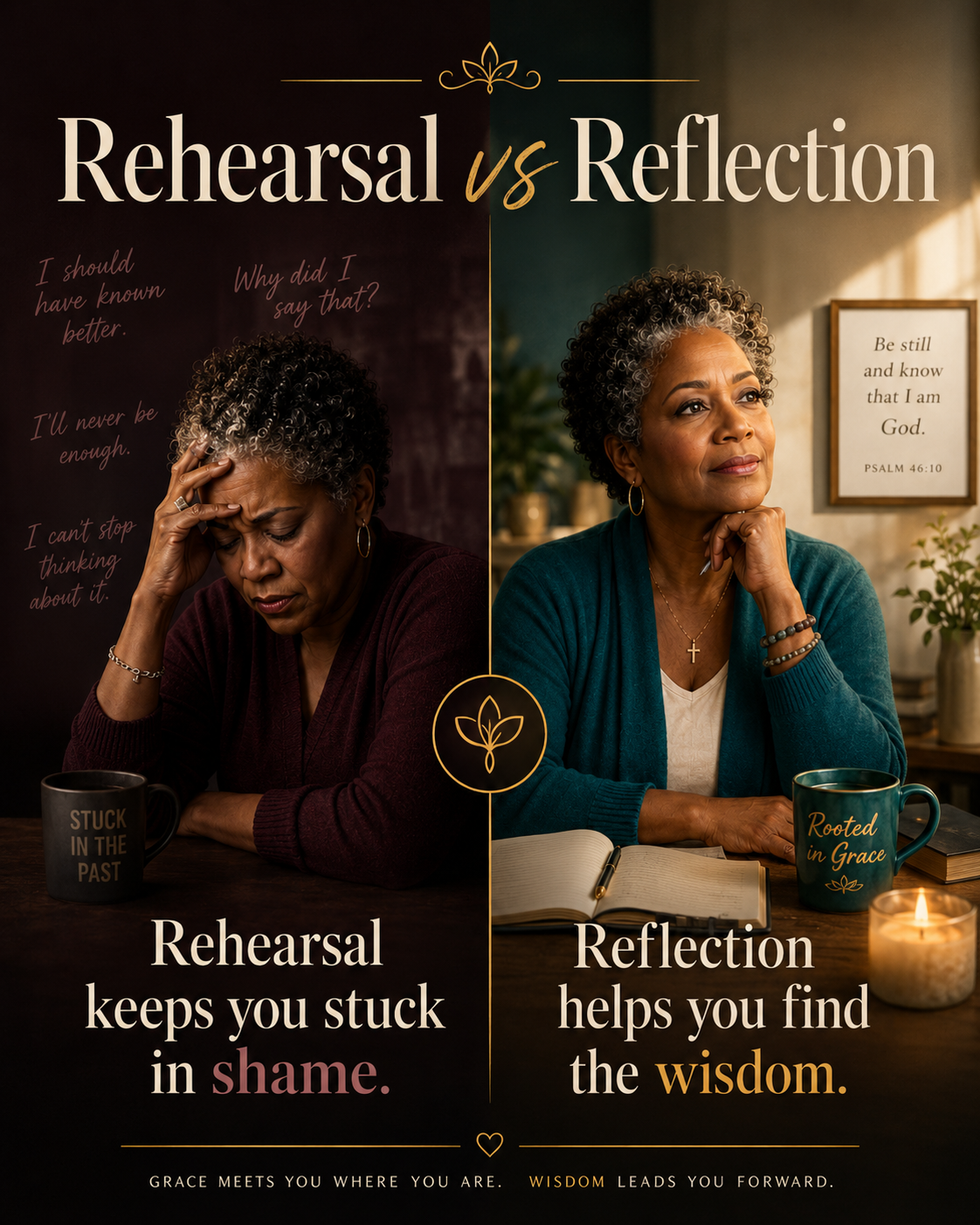
There is a difference.
A regret does not have to become a
life sentence. A painful memory does not have to become your identity. A
mistake does not have to become the name you answer to for the rest of your
life. That does not mean pretending it did not hurt. That does not mean acting
like the consequences were not real. That does not mean calling something good
that was harmful, wrong, or painful. It means refusing to let shame have the
final word. You can’t change what happened, but you can change what it
means.
That one sentence may be where some
of us need to start over.
The memory may still be true, but
the meaning may need healing. What happened may have been painful,
disappointing, embarrassing, or even life-altering. But it does not have to
mean you are foolish. It does not have to mean you are broken. It does not have
to mean you are disqualified. It does not have to mean your story is over.
Sometimes the start over is not
about changing the facts. Sometimes the start over is about changing the
interpretation.
Instead of saying, “I failed,”
maybe the meaning becomes, “I learned.” Instead of saying, “I should have known
better,” maybe the meaning becomes, “Now I know.” Instead of saying, “I wasted
time,” maybe the meaning becomes, “I gained wisdom.” Instead of saying, “I was
weak,” maybe the meaning becomes, “I survived something hard.”
I know this personally.
May 31st is the
anniversary of my mother’s passing, and for a long time, that date carried a
memory filled with regret. I still remember getting the call from my sister
late the night before informing me our mother’s health was declining. Since it
was already late, I decided I would get up early the next morning and drive the
222 miles to my parent’s home. My plan was to leave between 5:00 and 6:00 a.m.,
but the next morning, there was a terrible thunderstorm. Because of the storm,
I left about two hours later than I had planned. As I was driving down the
highway, still about two hours away, I received the call that my mother had
passed. For a long time, that memory hurt.
May 31st hurt. Mother’s Day hurt. Memorial Day stirred
it up. An early morning bad thunderstorm could take me right back to that memory.
Even driving by that spot on the highway reminded me of the regret that I did
not get there in time to say goodbye.
But over time, God helped me change
the meaning of that memory. I could not change what happened. I could not go
back and leave earlier. I could not control the storm and I could not change
the timing of my mother’s passing. But I could change what the memory meant.
I came to realize that my mother had already said her goodbyes to me and my
sisters in her own way. She did not need a dramatic final moment. She did not
need all of us standing around her bed holding on when she was ready to let go.
I believe my mother wanted to quietly slip away in her sleep. And that
changed everything.
The memory no longer says, “You
missed your chance.” Now it says, “She left in peace.”
It no longer says, “You should have
been there.” Now it says, “Love had already been spoken.”
It no longer says, “You failed.” Now
it says, “Mom knew she was loved.” That is what I mean when I say you can’t
change what happened, but you can change what it means.
The facts of the story did not
change. But the weight of the memory did.
And now, instead of carrying
regret, I carry gratitude. I carry the blessing of having had a mother who
loved us, raised us, and left us with memories that are no longer covered in
shame, but wrapped in love. That is why reflection matters. When we
reflect with grace, we give ourselves permission to see the whole story, not
just the painful part. Regret often tells one side of the story. It
focuses on what we did not do, where we did not show up, what we missed, or
what we wish had gone differently.
But wisdom asks a better question. What
else was true? Did I do the best I could with what I knew, what I had, and
where I was at the time? That does not erase the grief or the pain, but it can
ease the shame. And sometimes that is where healing begins.
That is good news for the woman who
is still carrying regret. The person who keeps thinking, “I should have known
better.” The woman who wishes she had made a different decision. The woman who
looks back at a younger version of herself and feels embarrassed, angry,
disappointed, or sad. The person who has been replaying the same chapter so
long that they have forgotten there is still more story to write.

Start over.
Not by erasing your story or by
denying what happened. Not by pretending you were not hurt and definitely not
by acting like you have it all together. Start over by telling yourself the
truth with grace. You did what you knew to do at the time. And if you knew
better and still missed it, there is grace for that too.
You survived what you did not know
how to explain. You learned from what you could not change. You grew in places
you did not expect to grow. You are not the same person you were then. That
memory may still be part of your story, but it does not have to be the whole
story.
This month, I want us to think
about memory differently. Not just as something we fear losing, but as
something we can learn to care for, understand, and use with wisdom. Memory is
personal. It shapes how we see our past, how we understand ourselves, and how
we move into the future. And for many midlife women, memory also becomes a
tender subject because we begin to notice changes in focus, recall, attention,
and mental sharpness.
So as National Start Over Day
approaches, here is your invitation:
Start over in how you remember
yourself. Stop rehearsing shame. Start reflecting with wisdom.
Stop calling yourself by the name
of an old mistake. Start recognizing the woman who lived, learned, grew, and is
still becoming. You cannot change every memory, but with the right help, you can change how you carry it. And sometimes
that is where the real start over begins.
Blessings,
Dr. Janice R. Love
In Her Right Mind