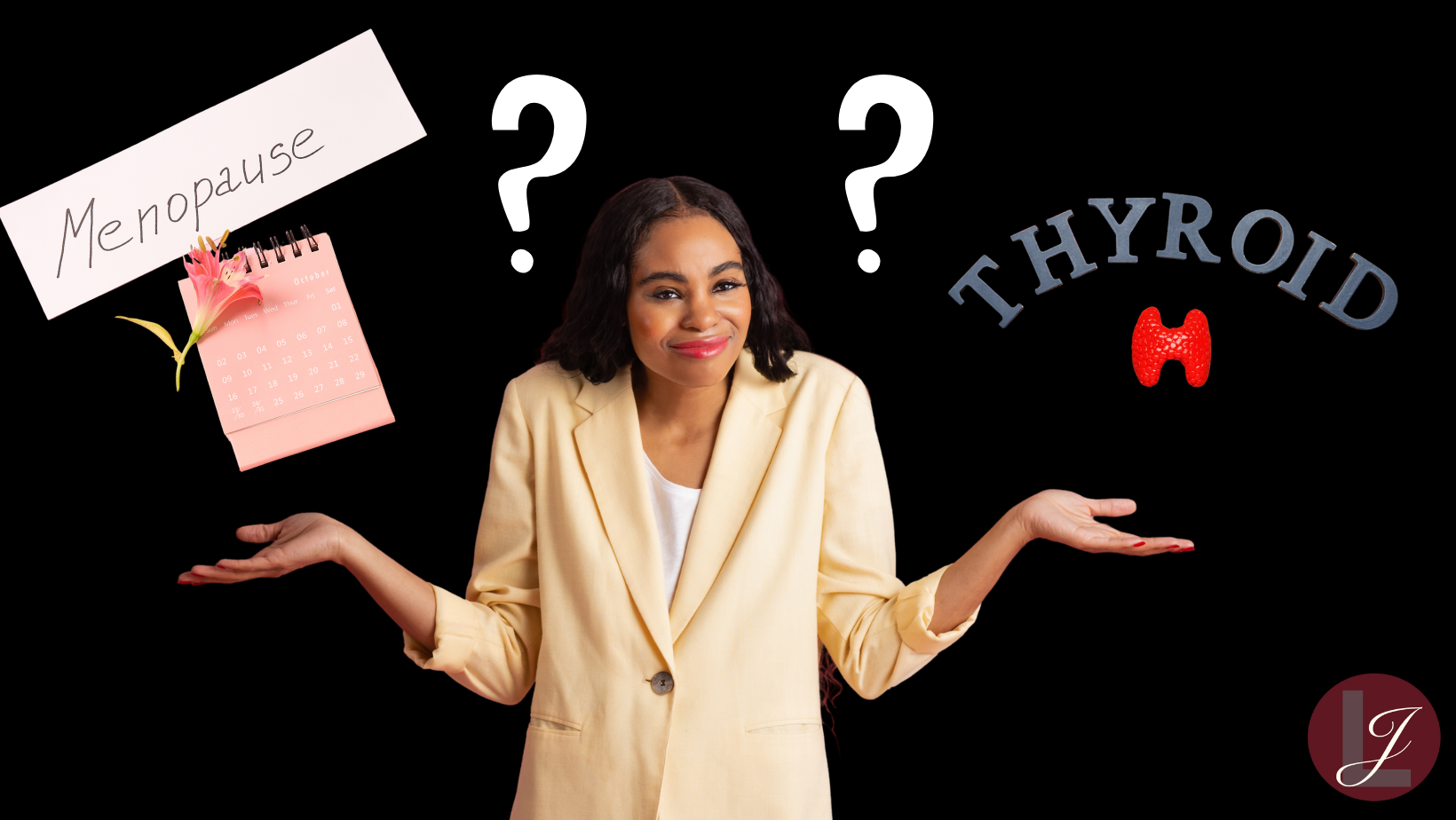
One of the biggest challenges for
women in midlife is figuring out what’s actually happening in our
bodies.
Hot flashes.
Irritability.
Anxiety.
Sleep issues.
Heart palpitations.
Weight changes.
Digestive problems.
Sound familiar?
For many women, the default answer
is, “Oh, that’s just menopause.” And sometimes, that’s true.
But sometimes—it’s not.
I am no stranger to thyroid issues.
Twenty years before the experience I shared in last week’s blog, I began
experiencing symptoms that I assumed were part of “the change.” I was
hot all the time. I felt irritable and anxious for no clear reason. My heart
would race. Food seemed to run right through me. I was losing weight without
trying.
If you’ve lived long enough, you
know how this goes—you start mentally checking boxes:
- Hot flashes? ✔️
- Mood changes? ✔️
- Sleep disruption? ✔️
I was convinced I was entering
menopause.
But my doctor listened closely and
said something that changed everything:
“Some of what you’re describing doesn’t sound like menopause.”
Blood work told the real story.
I had a classic case of Graves’
disease, a form of hyperactive thyroid, meaning my thyroid was
producing too much hormone and sending my entire system into overdrive. I
had only heard of Graves’ disease once before—when Olympic track star Gail
Devers was diagnosed and it was discussed during the Olympics. I never
imagined it would become part of my story.
I was referred to an
endocrinologist and underwent an iodine uptake test, which confirmed the
diagnosis.

For the next two years, I lived
with Graves’ disease—cycling in and out of remission. Sometimes I felt better.
Other times, the symptoms came roaring back. Then in 2006, it returned with a
vengeance.
After much prayer, medical
guidance, and reflection, I made the decision to have my thyroid neutralized.
Doctors explained that it is far safer—and much easier—to manage an underactive
thyroid than an overactive one. Sometimes I wonder if I made the right
decision.
Why This Matters Now
Here’s why I’m sharing this in Thyroid
Part II.
Many of the symptoms of hyperthyroidism
overlap with perimenopause and menopause, including:
- Heat intolerance or hot flashes
- Anxiety and irritability
- Sleep disturbances
- Heart palpitations
- Weight changes
- Digestive issues
- Fatigue that doesn’t make sense
When we assume everything is
hormonal aging, we risk missing something treatable.
And here’s the connection to last
week’s blog:
My recent experience with an underactive thyroid felt completely
different—because it was different. Until then, I had only ever known
what it felt like for my thyroid to be too fast, not too slow.
Same gland.
Different direction.
Totally different experience.
I want to say this clearly and
gently: If something feels off, don’t settle for assumptions.
It may not be menopause. It may not
be stress. It may not be “just getting older.”
It could be your thyroid. Experts
indicate that 60% of those with thyroid disease aren’t aware of their
condition. In fact my Mother was diagnosed in her late 70’s after I was
diagnosed with the illness.
Ask the questions. Request the
labs.
Listen to your body’s patterns.
Wisdom isn’t ignoring symptoms—it’s
paying attention to them.

About Symptoms & Patterns
·
Could my symptoms be related to my thyroid
rather than menopause—or in addition to it?
·
Are there symptoms I’m experiencing that
don’t typically fit menopause?
About Testing
· Can
we run a full thyroid panel, not just TSH?
· Will
you check Free T3, Free T4, and thyroid antibodies if needed?
About Menopause Overlap
·
How do you distinguish between menopause
symptoms and thyroid-related symptoms?
·
Is it possible that I’m experiencing both
menopause and a thyroid imbalance at the same time?
About History & Risk
·
Given my personal or family history, am I at
higher risk for thyroid disease?
·
Should my thyroid be monitored more
frequently during perimenopause or menopause?
About Next Steps
·
If a thyroid issue is found, what are my
treatment options?
·
How will we monitor changes over time and
adjust treatment if needed?
· What
symptoms should prompt me to call you right away rather than waiting
·
What should I be paying attention to in my
body between visits—and how can we partner in managing this together?
In the next blog, we’ll talk about:
- How thyroid issues can quietly affect brain health
- Why women’s symptoms are often dismissed or
misattributed
- And how learning your body’s signals is an act of
stewardship, not fear
Blessings,
Dr. Janice R. Love